As an avid skywatcher and astronomy enthusiast, I always look forward to what the cosmos has in store for us each month. June 2026 promises to be a particularly exciting period, offering a plethora of breathtaking celestial spectacles. From dazzling planetary alignments to subtle deep-sky wonders, this June 2026 Astronomical Phenomena Guide is designed to help you make the most of every clear night. So, grab your binoculars, mark your calendars, and prepare to be amazed by the beauty of our universe. Whether you’re a seasoned astronomer or just starting your journey, the night sky in June 2026 has something for everyone.
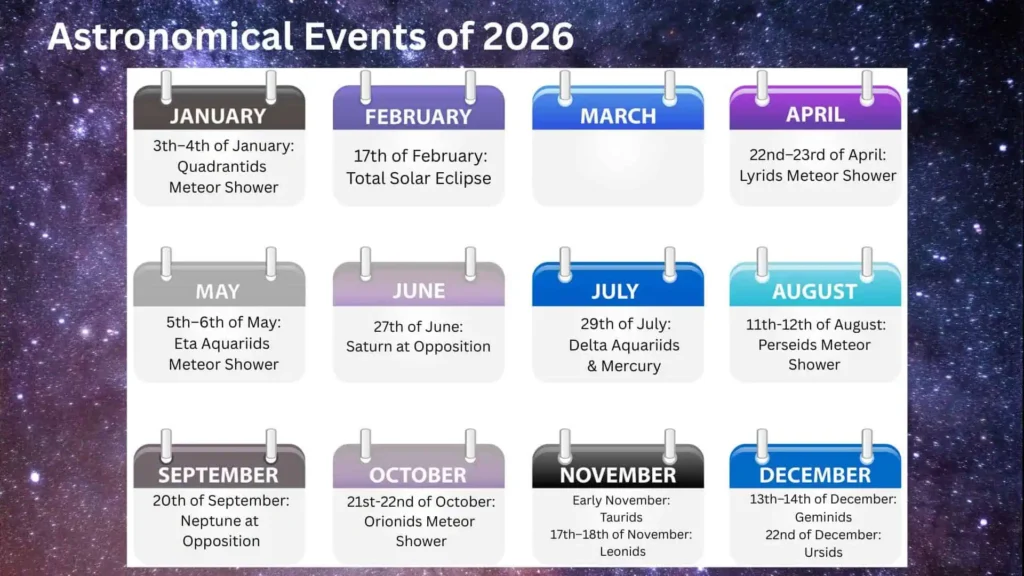
Unveiling the Celestial Canvas: June 2026 Sky Overview
June brings warmer weather to many parts of the world, making it an ideal time for skywatching. The days are long, but the nights, especially around the new moon, offer fantastic opportunities for stargazing. This month, we’ll see a shift in prominent constellations as the Earth moves along its orbit, revealing new sectors of our galactic core. Understanding the general layout of the June night sky is your first step towards an unforgettable astronomical adventure.
The Celestial Canvas: Constellations of June
In the Northern Hemisphere, June marks the true arrival of summer constellations. Look for the iconic Summer Triangle, a prominent asterism formed by Vega in Lyra, Deneb in Cygnus, and Altair in Aquila. This trio will dominate the eastern sky after dusk, making it a fantastic landmark for navigation. To the south, the sprawling constellation of Scorpius, with its bright red star Antares, will be a majestic sight. Nearby, Sagittarius, home to the Milky Way’s brightest region, begins its climb, promising views of countless star clusters and nebulae later in the night. Meanwhile, observers in the Southern Hemisphere will continue to enjoy constellations like Crux (the Southern Cross) high overhead, along with Centaurus and Lupus, offering their own unique celestial treasures.

Phases of the Moon: Your Monthly Sky Calendar
The Moon’s phases significantly impact the visibility of fainter objects. A bright moon can wash out meteor showers and deep-sky treasures. Therefore, planning your skywatching around its cycle is crucial. Here are the approximate lunar phases for June 2026:
- New Moon: June 14th
- First Quarter: June 21st
- Full Moon: June 29th
- Last Quarter: June 7th
The days surrounding the New Moon (roughly June 12th to 16th) will offer the darkest skies, presenting the best conditions for observing meteor showers and faint deep-sky objects. Conversely, the Full Moon will be ideal for moon gazing itself, revealing stunning surface details even with small binoculars.
Planetary Parade: What to Spot in June 2026
June 2026 features several planets gracing our skies, each offering distinct opportunities for observation. Their positions and brightness change throughout the month, so precise timing and good preparation are key to capturing their best views. Let’s delve into what each planet offers.
Mercury: The Elusive Inner Planet
Mercury, the innermost planet, is always a challenge to spot due to its proximity to the Sun. In early June 2026, it might make a brief appearance low in the western sky shortly after sunset, possibly in conjunction with Venus. Keep an eye on the twilight sky during the first week. By mid-month, it will transition to the morning sky, becoming slightly more accessible low in the east before sunrise towards the end of June. Binoculars will greatly aid your search for this tiny, fleeting world.
Venus: The Evening/Morning Star
Venus remains a brilliant beacon in the June sky. For much of the month, it will be visible as the “Evening Star”, dazzling low in the western sky after sunset. Its intense brightness makes it easy to locate, even in light-polluted areas. Around June 10th, it will have a fascinating close approach with Mercury, a truly spectacular sight for patient observers. Towards the very end of June, Venus will begin its shift towards the morning sky, hinting at its eventual role as the “Morning Star.”
Mars: The Red Planet’s Journey
Mars continues its journey across our celestial sphere in June 2026. While not at its brightest, it will be a steady presence in the evening sky, moving through the constellation of Gemini and later Cancer. Look for its distinctive reddish hue after sunset. A close approach with the Moon around June 15th will offer a beautiful pairing. Through a telescope, Mars will appear as a small disk, revealing subtle surface features if atmospheric conditions are stable. Observing Mars requires patience and clear skies.
Jupiter: The Gas Giant’s Grandeur
Jupiter, the largest planet in our solar system, will be a magnificent target in the pre-dawn eastern sky for much of June. Its immense size and cloud bands make it a fantastic object for even small telescopes. You’ll easily spot its four brightest moons—Io, Europa, Ganymede, and Callisto—which appear as tiny stars dancing around the giant. These celestial objects change position noticeably over just a few hours. This makes for dynamic skywatching. Below is a simplified guide to their visibility:
| Date Range (Approx.) | Event Focus | Best Viewing Times | Key to Spot |
|---|---|---|---|
| Early June | Greatest Western Elongation for moons | Pre-dawn | Moons furthest from Jupiter |
| Mid-June | Moon-Jupiter Conjunction | Pre-dawn | Beautiful pairing |
| Late June | Shadow transits & occultations | Various, check daily | Requires detailed almanac |
Saturn: The Ringed Jewel
Saturn, with its breathtaking ring system, is undeniably one of the most beloved planets to observe. In June 2026, Saturn will be a prominent object in the eastern morning sky. While a small telescope is required to truly appreciate its iconic rings, even binoculars can show its distinctly non-stellar shape. The ringed jewel will rise earlier each night, offering longer observing sessions as the month progresses. A stunning celestial dance with the Moon occurs early in the month, providing a fantastic photo opportunity for astrophotographers.
Uranus and Neptune: Distant Worlds
For those with larger telescopes and a sense of adventure, Uranus and Neptune offer the thrill of spotting the distant worlds of our solar system. Uranus, shining faintly, will be found in the constellation Taurus during June. Neptune, even fainter, resides in Pisces. Both require detailed star charts and powerful optics to locate, appearing as tiny, bluish-green disks. Spotting them is a rewarding challenge for dedicated amateur astronomers and an excellent exercise in identifying celestial objects.
Spectacular Special Events of June 2026
Beyond the steady march of the planets, June 2026 promises several dynamic and spectacular events. These include captivating conjunctions and the opportunity to catch shooting stars. Make sure to add these key dates to your astronomy calendar so you don’t miss out on these incredible sights. Careful planning will ensure you have the optimal viewing conditions for each.
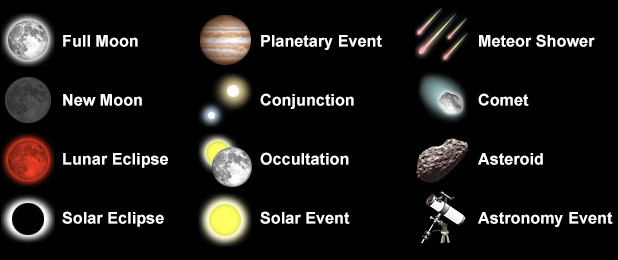
Planetary Conjunctions and Close Approaches
Conjunctions are mesmerizing events where two or more celestial bodies appear close together in the sky. These celestial events offer beautiful visual pairings. June 2026 has a few notable conjunctions that are worth seeking out. These close approaches are often visible to the naked eye or with binoculars, making them accessible even for novice skywatchers. Here’s a breakdown of the highlights:
| Date (UTC) | Event | Closest Approach (Approx.) | Visibility | Notes |
|---|---|---|---|---|
| June 3 | Moon & Saturn Conjunction | ~2 degrees | Early morning | Beautiful pairing, especially with binoculars. |
| June 7 | Moon & Jupiter Conjunction | ~1.5 degrees | Pre-dawn | A bright pairing, easy to spot before sunrise. |
| June 10 | Mercury & Venus Conjunction | ~0.5 degrees | Post-sunset (low in west) | Challenging due to low horizon, binoculars recommended. |
| June 15 | Moon & Mars Conjunction | ~3 degrees | Late evening | Moon passes through Taurus, near Mars. |
| June 22 | Venus & Pollux Conjunction | ~1 degree | Evening | Beautiful pairing of the bright planet with a twin star. |
Meteor Showers: Catching Shooting Stars
June is not typically known for major meteor showers, but there are a few minor ones that can still provide some enjoyable views. The Daytime Arietids and Beta Taurids are active in June, though they are difficult to observe as their radiants are near the Sun. However, the June Bootids can sometimes put on an unexpected show, albeit with low Zenithal Hourly Rates (ZHRs). Their peak is typically around June 27th. To maximize your chances of catching these shooting stars, find a dark-sky location, lie back, and let your eyes adapt to the darkness for at least 20 minutes. No special equipment is needed, just patience and a comfortable spot.
The June Solstice: The Longest Day
For the Northern Hemisphere, June 20th marks the June Solstice, the official start of astronomical summer. This is the day with the longest period of daylight and the shortest night of the year. Conversely, in the Southern Hemisphere, it’s the winter solstice, marking the shortest day. While not an event to observe in the traditional sense, it’s a significant astronomical milestone that highlights Earth’s tilt and its journey around the Sun. Embrace the extra daylight for outdoor activities, but remember those short nights are still valuable for stargazing after dusk.
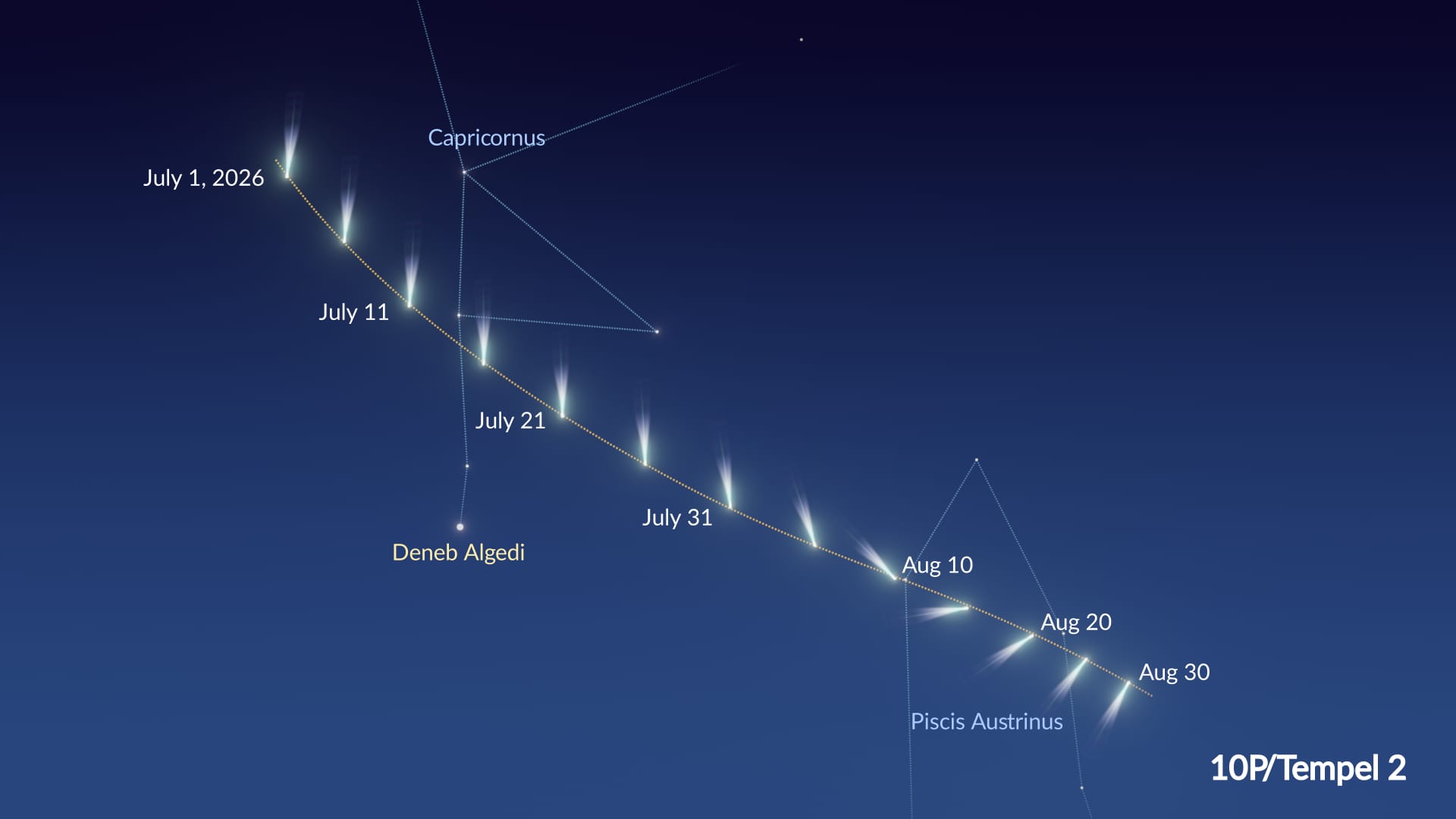
Beyond the Planets: Deep-Sky Delights
Once you’ve admired the planets and caught a few meteors, turn your attention to the more distant wonders of the universe. June’s dark, clear nights, especially around the New Moon, are perfect for exploring deep-sky objects. These include glittering star clusters and faint, wispy nebulae. You’ll need a good pair of binoculars or a telescope to truly appreciate their intricate beauty, but the reward is immense.
Summer Star Clusters and Nebulae
With constellations like Sagittarius and Scorpius rising, June offers a treasure trove of deep-sky objects. The Milky Way’s galactic core is particularly rich in these wonders. In Hercules, you can find the spectacular globular cluster M13, visible as a fuzzy patch even with the naked eye from dark locations. With a telescope, it resolves into a dazzling ball of thousands of stars. Nearby in Scorpius, M4, another bright globular cluster, is easily spotted with binoculars. For nebulae, turn towards Sagittarius to discover the magnificent Lagoon Nebula (M8) and the intricate Trifid Nebula (M20). These colorful clouds of gas and dust are stellar nurseries where new stars are born. They are fantastic targets for astrophotography.
| Object | Type | Constellation | Optimal Viewing (Northern Hemi.) | Notes |
|---|---|---|---|---|
| M13 | Globular Cluster | Hercules | All night | Naked eye from dark sites; stunning in scope. |
| M4 | Globular Cluster | Scorpius | Evening | Binocular friendly; close to Antares. |
| M8 (Lagoon Nebula) | Emission Nebula | Sagittarius | Late evening/early morning | Best with telescope; often seen with M20. |
| M20 (Trifid Nebula) | Emission/Reflection Nebula | Sagittarius | Late evening/early morning | Requires telescope; striking dark lanes. |
| M57 (Ring Nebula) | Planetary Nebula | Lyra | All night | Small but distinct “smoke ring” through scope. |
The Milky Way: Our Home Galaxy’s Splendor
June is also an excellent month to witness the grandeur of our own Milky Way galaxy. As Sagittarius rises higher in the sky, the rich, dusty band of our galaxy becomes more apparent. To truly appreciate the galactic core, you’ll need to escape significant light pollution and find a genuinely dark-sky location. Away from city lights, the Milky Way appears as a diffuse, cloudy band stretching across the heavens. It’s a humbling and awe-inspiring sight, reminding us of our place in the vast cosmos. I always find a profound sense of connection under its glow.
Essential Tools and Tips for Skywatchers
To maximize your enjoyment of the June 2026 Astronomical Phenomena Guide, a little preparation goes a long way. Having the right tools and understanding some basic skywatching principles can transform a casual glance into a truly memorable experience. Don’t worry, you don’t need expensive equipment to get started.
Gear Up: Telescopes, Binoculars, and Apps
While the naked eye reveals much, binoculars are arguably the best first investment for any aspiring skywatcher. Even a standard 7×50 or 10×50 pair can dramatically enhance your view of the Moon, reveal Jupiter’s moons, and resolve many star clusters. If you’re ready for a telescope, consider a beginner-friendly refractor or a Dobsonian for ease of use. Beyond optics, mobile astronomy apps are invaluable. Apps like Stellarium or SkyView provide real-time sky charts, help you locate celestial objects, and offer event calendars for specific dates. A red-light flashlight is also crucial for preserving your night vision.
Master the Dark: Battling Light Pollution
Light pollution is the bane of skywatchers. Artificial light from cities washes out fainter stars and deep-sky objects. For the best optimal viewing conditions, try to escape city limits. Use light pollution maps (available online) to find darker areas nearby. If you can’t travel far, focus on brighter objects like the Moon and planets. Even from suburban areas, many of the celestial events in this guide are still visible. Always allow your eyes at least 20-30 minutes to adapt to the darkness before serious stargazing; this dramatically improves what you can see.
Weather Wise: Planning Your Observing Sessions
Clear skies are paramount for skywatching. Before heading out, always check the weather forecasts specifically for cloud cover and atmospheric transparency. Websites and apps dedicated to astronomy planning often include these details. Humidity can also be an issue, causing telescopes to de-dew. A calm night with steady air (low “seeing”) is ideal for high-magnification views of planets and the Moon. Don’t be discouraged by a cloudy night; there’s always tomorrow or the next celestial event.
Safety First: Enjoying the Night Sky Responsibly
When observing at night, especially in remote locations, safety is key. Dress appropriately for the weather, even if it feels warm during the day, as nights can get chilly. Bring water and snacks, and inform someone of your plans if you’re venturing to an isolated spot. If using a telescope, ensure it’s stable and won’t tip over. Most importantly, always be mindful of your surroundings. Enjoying the night sky responsibly ensures a fun and safe experience for everyone involved. I’ve had countless amazing experiences under the stars, and safety has always been my top priority.
June 2026 truly offers a diverse array of astronomical phenomena for observers of all levels. From stunning planetary conjunctions to the misty allure of the Milky Way, there’s always something incredible to discover above. This June 2026 Astronomical Phenomena Guide serves as your personal roadmap to the wonders of the cosmos. So, step outside, look up, and let the universe reveal its timeless beauty to you. Happy skywatching!