As an avid skywatcher and someone deeply fascinated by the celestial dance above us, I often find myself marking my calendar with upcoming lunar events. There’s a profound connection to be found in aligning with the moon’s ancient rhythms, whether for planning activities, setting intentions, or simply appreciating the cosmic spectacle. That’s why diving into the January 2026 Moon Age Calendar is more than just a chronological exercise; it’s an invitation to engage with the natural world in a deeply meaningful way. Understanding the moon’s age and its journey through its phases can illuminate everything from gardening schedules to personal reflection periods. Let’s embark on this lunar journey for January 2026.
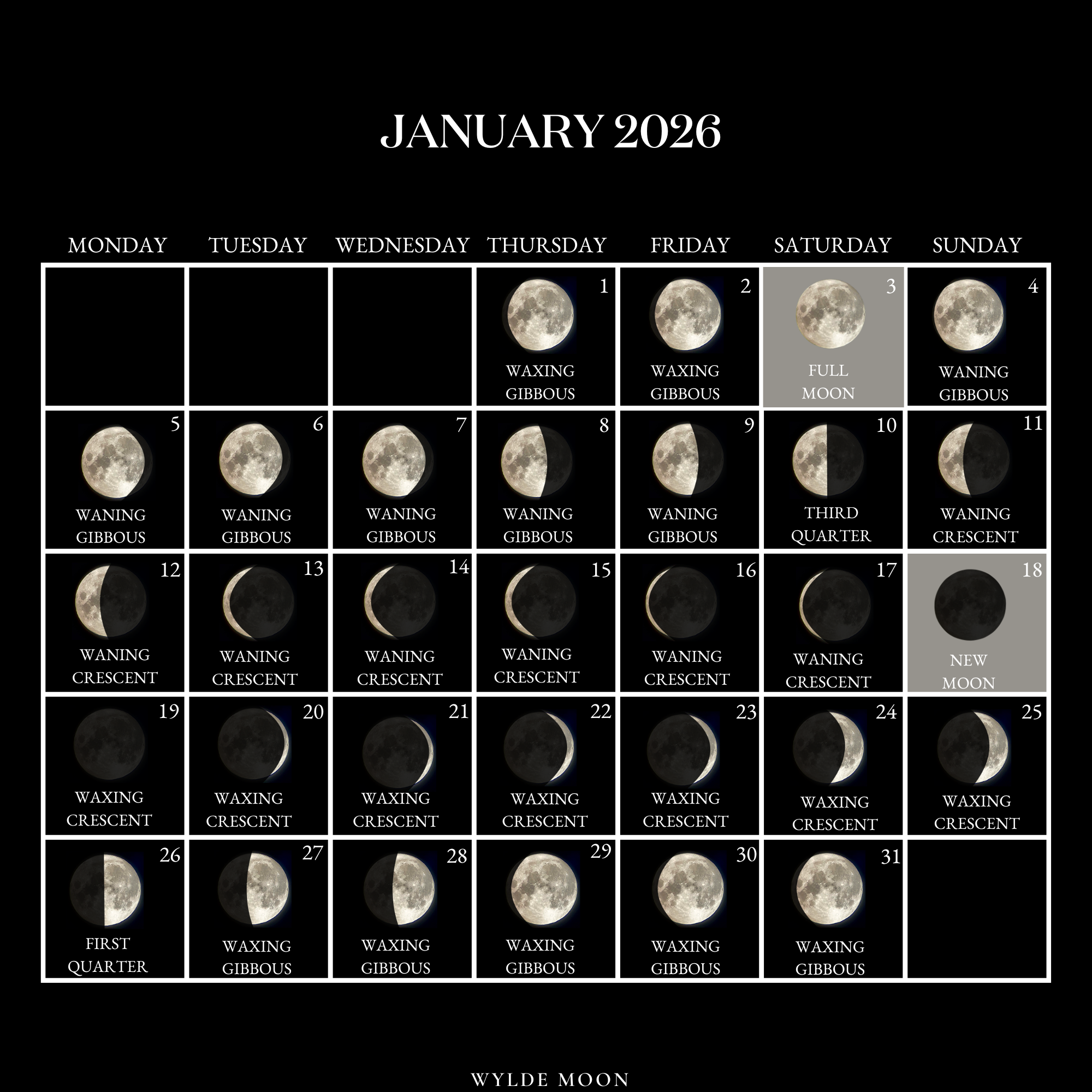
Understanding the Moon’s Age and Its Grand Phases
Before we pinpoint specific dates for the January 2026 Moon Age Calendar, it’s essential to grasp what ‘moon age’ truly means and why it’s so significant. The moon’s age refers to the number of days, hours, and minutes that have passed since the last New Moon. This age directly correlates with its phase, dictating how much of the moon’s face is illuminated by the sun as seen from Earth. It’s a continuous, rhythmic cycle, rarely deviating from its predictable path, offering a consistent celestial clock for us all.
What Exactly is Lunar Age?
Think of moon age as the moon’s birthday, restarting every New Moon. When the moon is 0 days old, it’s a New Moon – virtually invisible to us. As days pass, its age increases, and so does its visible illumination, moving through crescent, quarter, and gibbous phases until it reaches maximum illumination at the Full Moon, typically around 14.7 days old. This numerical journey helps us anticipate and appreciate the subtle changes in our night sky, tying directly into various cultural practices and astronomical observations.
The Magnificent Lunar Cycle: A Celestial Dance
The lunar cycle, or synodic month, spans approximately 29.5 days. It’s the period it takes for the moon to complete one full revolution around the Earth, returning to the same phase relative to the sun and Earth. This cycle governs the eight principal moon phases we observe:

- New Moon: The moon is between the Earth and the sun, appearing dark. A time for new beginnings and setting intentions.
- Waxing Crescent: A sliver of light appears, growing larger each night. Energy builds, perfect for initiating projects.
- First Quarter: Half of the moon is illuminated, marking a point of action and decision.
- Waxing Gibbous: More than half illuminated, approaching the Full Moon. Energy surges, encouraging refinement and preparation.
- Full Moon: The entire face is lit up, opposite the sun from Earth. A time of culmination, release, and intense energy.
- Waning Gibbous: Illumination starts to decrease. Energy shifts towards gratitude and sharing.
- Last Quarter: The other half is illuminated, now waning. A period for reflection and release.
- Waning Crescent: A final sliver of light before the New Moon. A time for rest, clearing, and preparation for new cycles.
Each phase carries its own unique energy and provides specific opportunities for observation and engagement. Understanding these phases is key to truly utilizing any moon age calendar, especially for a specific month like January 2026.
The January 2026 Moon Age Calendar: Your Celestial Guide
For those eager to plan their stargazing, gardening, or personal reflection, having a clear roadmap of the moon’s journey through January 2026 is invaluable. Here’s a detailed look at the major moon phases for the month, along with key times and observations. I’ve found that pinpointing these moments can make all the difference in connecting with lunar energy.
Key Moon Phases in January 2026
Here’s a table outlining the primary moon phases for January 2026. All times are Coordinated Universal Time (UTC), so you may need to adjust for your local timezone. This precise timing allows for optimal observation and planning, ensuring you don’t miss any significant celestial events.
| Date (2026) | Phase | Time (UTC) | Approx. Illumination | Moon Age | Observational Notes & Activities |
|---|---|---|---|---|---|
| Jan 1 | Waning Crescent | Early Morning | ~15% | 20-21 Days | Preparing for new beginnings. Good for dark sky viewing. |
| Jan 8 | New Moon | 07:30 | 0% | 0 Days | Excellent for deep sky stargazing. Set intentions. |
| Jan 15 | First Quarter | 01:45 | 50% | 7.5 Days | Moon visible in afternoon/evening. Action-oriented phase. |
| Jan 22 | Full Moon | 18:10 | 100% | 14.5 Days | Brightest moon, perfect for lunar photography. Culmination. |
| Jan 30 | Last Quarter | 14:20 | 50% | 22.5 Days | Morning moon viewing. Time for release and letting go. |
The January 2026 New Moon: A Fresh Start
The New Moon in January 2026, falling on the 8th, is a potent time. With the moon’s face dark and blending into the night sky, it signals a period of quiet contemplation and fresh beginnings. For stargazers, this is arguably the best time of the month. The absence of moonlight reduces light pollution, allowing fainter celestial objects like distant galaxies and nebulae to shine through. My personal tip: grab a telescope during this period and explore the wonders of the Milky Way!
The Glorious January 2026 Full Moon: The Wolf Moon
Mid-month, on January 22nd, we’ll experience the Full Moon January 2026. Traditionally known as the Wolf Moon, this full illumination historically coincided with hungry wolves howling outside villages. From an observational standpoint, it’s a breathtaking sight, casting bright light across landscapes. While not ideal for deep sky objects, it’s a prime opportunity for moon photography, capturing intricate crater details, and simply marveling at its radiant beauty. Spiritually, it’s a time for releasing what no longer serves you and celebrating achievements.
Navigating the January 2026 Lunar Cycle with Purpose
Each phase of the moon brings with it a distinct energy, a subtle influence that many people choose to harness for various activities. My own journey with lunar living has shown me how powerful these connections can be. By understanding the ebb and flow outlined in the January 2026 Moon Age Calendar, you can intentionally align your actions with the cosmos.
Embracing the New Moon’s Introspection (January 8th)
The New Moon is a period of quiet reflection and setting intentions. It’s like pressing a cosmic reset button. During this time in January 2026, I often find myself journaling about new goals or meditating on what I want to manifest. It’s also an unparalleled time for astrophotography of distant galaxies due to the dark skies.
Building Energy with Waxing Phases (Jan 9th – 21st)
As the moon waxes from a sliver to a plump gibbous, its energy is one of growth and building. This is when I focus on taking action on those intentions set during the New Moon. It’s a fantastic period for launching new projects, nurturing relationships, and seeing ideas come to fruition. Gardeners often find this a fertile time for planting above-ground crops, observing the moon’s pull on growth.
The Full Moon’s Radiance and Release (January 22nd)
The Full Moon is a crescendo of energy, a time of illumination and revelation. It’s when things come to a head, when emotions can feel heightened. I personally use this phase for gratitude practices, releasing old patterns, and celebrating accomplishments. It’s also the perfect moment for lunar photography, capturing the moon’s full glory. Many spiritual practices emphasize ritual during this powerful phase.
Waning Phases: Releasing and Reflecting (Jan 23rd – 29th)
As the moon wanes, its energy shifts towards letting go, introspection, and winding down. This is the ideal time to clear clutter, finish up projects, and prepare for the next New Moon. For gardeners, it’s traditionally seen as a good time for weeding, pruning, and planting root crops, as the moon’s gravitational pull is believed to draw energy downwards. It’s a phase of gradual release, leading to deeper internal work.
Practical Applications of the January 2026 Moon Calendar
The utility of the moon calendar extends far beyond simple observation. For centuries, people have harnessed lunar cycles for practical purposes, integrating them into daily life. From the intricate calculations of celestial mechanics to the wisdom of traditional gardening, the moon offers a powerful rhythm for our world. Understanding these applications enhances the value of your January 2026 Moon Age Calendar.

Source: https://images.template.net
For Stargazers and Skywatchers: Maximizing Observation
This is where the moon’s phases really make a difference. The New Moon in January 2026 provides the darkest skies, making it prime time for observing faint objects like galaxies, nebulae, and star clusters. As an experienced skywatcher, I always mark the New Moon on my calendar for my deep sky stargazing sessions. During the waxing and waning crescent phases, you can still enjoy views of brighter planets and the moon itself, focusing on the terminator line (the division between light and dark) for dramatic crater views. The Full Moon, while stunning, washes out many fainter objects, so I reserve those nights for casual moon gazing or astrophotography specifically of the moon.
Lunar Gardening: Planting by the Moon’s Influence
For centuries, farmers and gardeners have followed the moon’s phases, believing its gravitational pull influences plant growth similar to how it affects tides. This ancient practice, known as biodynamic gardening, aligns perfectly with a January 2026 Moon Age Calendar. During the waxing phases (from New Moon to Full Moon), when light is increasing, it’s considered ideal for planting leafy greens, flowers, and above-ground crops. The rising light is thought to encourage upward growth. Conversely, during the waning phases (from Full Moon to New Moon), when light decreases, it’s a good time for planting root crops, pruning, fertilizing, and weeding, as the energy is believed to be drawn downwards into the soil. I’ve seen firsthand the subtle but noticeable benefits this approach can yield in my own small garden.
Fishing & Tides: Understanding Lunar Pull
The moon’s gravitational pull is the primary driver of ocean tides, and this directly impacts fishing conditions. Higher tides during New Moon and Full Moon phases (spring tides) often create strong currents, which can stir up nutrients and attract fish closer to shore or into estuaries. Conversely, the quarter moon phases (neap tides) result in weaker tides. Many experienced anglers consult lunar fishing calendars to predict the best times to cast their lines, noting that fish activity can be influenced by the moon’s position and phase. So, if fishing is your hobby, consulting the January 2026 Moon Age Calendar could give you an edge!
Astrology & Spirituality: Connecting with Lunar Energy
In astrology, each moon phase carries significant symbolic meaning. The New Moon is for intention setting and new beginnings, while the Full Moon is for manifestation, release, and culmination. Many spiritual practices and mindfulness routines incorporate the lunar cycle, using it as a guide for meditation, ritual, and personal growth. Aligning your intentions with the moon’s waxing energy or using the waning phase for shedding old habits can be a powerful practice. The specific astrological sign the moon is in during its phases also adds another layer of interpretation, providing deeper insights into daily energies. It’s a beautiful way to connect with the natural rhythms of the universe.
Photography: Capturing Celestial Beauty
For photographers, the moon offers endless opportunities. The Full Moon is spectacular for wide-angle shots showcasing its grandeur against a landscape. However, for detailed shots of craters and surface features, the crescent and quarter phases are often preferred. The shadows cast along the terminator line (the division between light and dark) reveal incredible three-dimensional depth that is lost during a Full Moon. Dark sky photography is best during the New Moon when there’s no lunar interference. Experimenting with different lenses and settings across the various phases of the January 2026 Moon Age Calendar will yield stunning results. My personal favorite is capturing the delicate glow of a Waxing Crescent just after sunset.
Personal Well-being: Aligning with Natural Rhythms
Beyond specific activities, simply observing and acknowledging the lunar cycle can have a profound impact on personal well-being. It encourages us to slow down, connect with nature, and recognize the cyclical patterns in our own lives. Many find that aligning daily activities with the moon’s energy leads to greater harmony and reduced stress. For example, using the waxing period for productivity and the waning period for rest and reflection. It’s a gentle reminder of the constant flux and flow in the universe, and our place within it. The January 2026 Moon Age Calendar can be a simple yet powerful tool for self-care and mindfulness.
Beyond January 2026: Tracking the Moon Throughout the Year
While our focus here is on the January 2026 Moon Age Calendar, the principles and applications discussed are timeless. The moon’s cycle is a constant, recurring pattern that provides a steady rhythm for our planet and our lives. My journey has taught me the immense value of consistent observation.
Resources for Future Moon Calendars
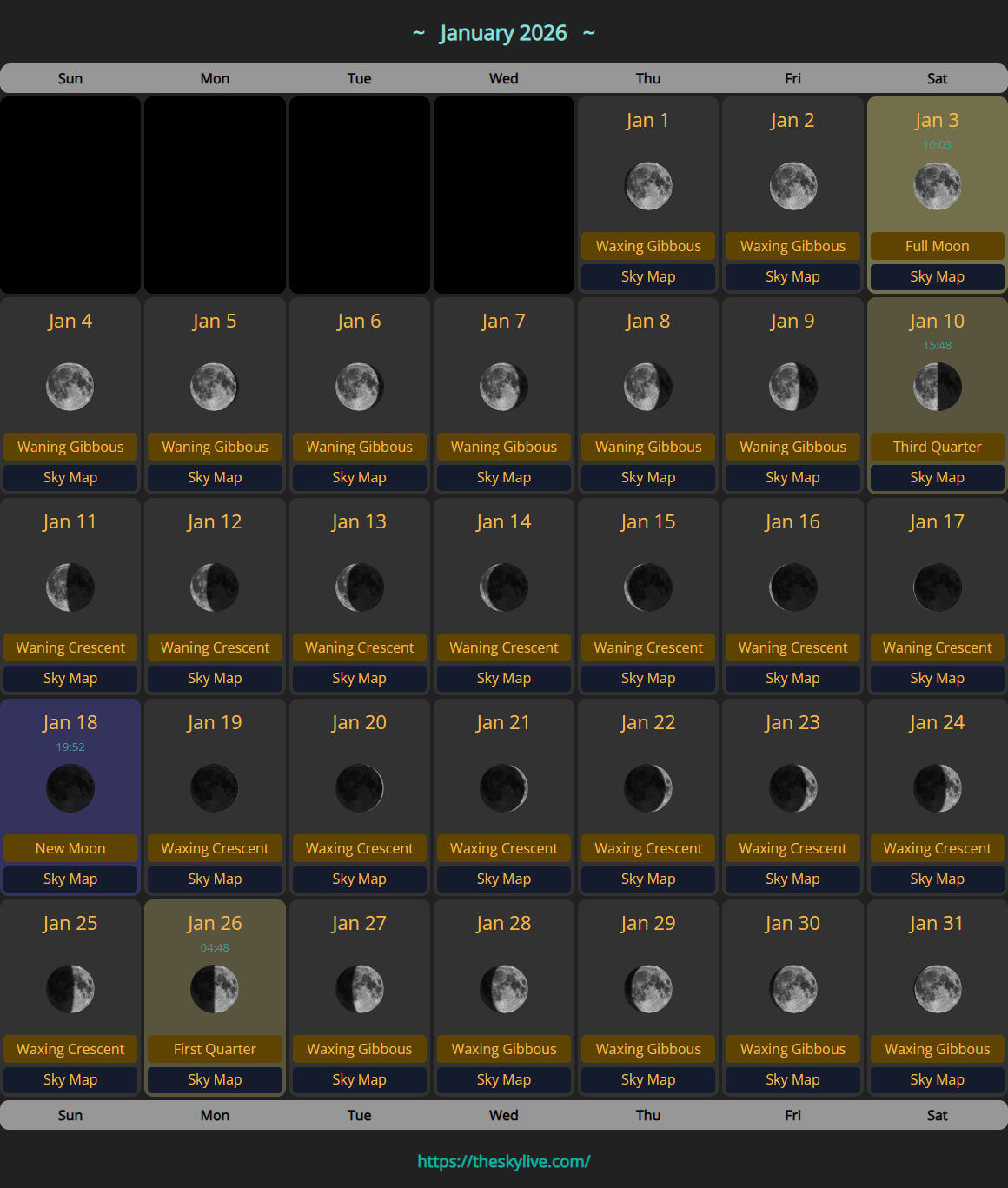
Fortunately, there are many excellent resources available for tracking the moon beyond a single month. Astronomical almanacs, dedicated moon phase apps, and reputable astronomy websites offer detailed lunar calendars for the entire year and even years into the future. These tools often provide not only the major phases but also specific rise and set times, illumination percentages, and even information on eclipses or other notable celestial events. Becoming familiar with these resources will empower you to continue your lunar journey year-round, integrating this ancient wisdom into your modern life.
Source: https://static.theskylive.com
The Importance of Observing Lunar Cycles Long-Term
Engaging with the moon’s cycle on a regular basis builds a deeper connection to natural rhythms. Over time, you’ll begin to notice patterns in your own energy, productivity, and mood that might correspond with the lunar phases. It fosters a sense of being part of something larger, a profound connection to the cosmos. By consistently using tools like the January 2026 Moon Age Calendar, we cultivate mindfulness, plan more effectively, and enrich our overall experience of the world around us. It’s a continuous learning process, offering new insights with every turn of the lunar wheel.
Embracing the January 2026 Moon Age Calendar is far more than just knowing when the Full Moon is; it’s about tapping into an ancient rhythm that can enrich your life in myriad ways. Whether you’re a seasoned astronomer, a curious gardener, an avid angler, or simply someone seeking a deeper connection to the natural world, understanding the moon’s age and its phases offers a fascinating lens through which to view the month. So, mark your calendars, step outside, and let the lunar light guide you through the wonders of January 2026.
Frequently Asked Questions
What is ‘moon age’ and why is it important for the January 2026 calendar?
Moon age refers to the number of days, hours, and minutes since the last New Moon. It’s crucial for the January 2026 calendar as it directly indicates the moon’s phase, illumination, and helps predict optimal times for activities like stargazing, gardening, or spiritual practices aligned with lunar energy.
When is the New Moon and Full Moon in January 2026, and what activities are best for each?
The New Moon in January 2026 is on January 8th (UTC), ideal for deep sky stargazing and setting new intentions due to dark skies. The Full Moon (Wolf Moon) is on January 22nd (UTC), perfect for lunar photography, releasing old patterns, and celebrating accomplishments due to its full illumination.
How can I use the January 2026 Moon Age Calendar for gardening?
For lunar gardening, the waxing phases (Jan 9-21) are traditionally best for planting above-ground crops and flowers, as the increasing light encourages upward growth. The waning phases (Jan 23-29) are ideal for root crops, pruning, weeding, and fertilizing, as energy is believed to be drawn downwards.
Does the moon in January 2026 affect fishing and tides?
Yes, the moon significantly impacts tides, which in turn affect fishing. During the New Moon (Jan 8) and Full Moon (Jan 22), spring tides occur with stronger currents, often stirring up nutrients and making it a potentially good time for fishing. Quarter moon phases (Jan 15, Jan 30) have weaker neap tides, which can influence fish activity differently.