As the days grow shorter and a crisp chill fills the air, winter brings a unique opportunity for discovery and hands-on learning. Forget about cabin fever! December 2026 is the perfect time to transform your home or classroom into a vibrant laboratory where curiosity thrives. Engaging in winter science experiments isn’t just a way to pass the time; it’s an exciting journey into the natural phenomena that define the colder months, making complex scientific principles accessible and incredibly fun for all ages. We’re talking about exploring the magic of ice, the wonder of snow, and the beauty of crystal formation, all with simple household items. Get ready to embark on an educational adventure!

Unlocking the Wonders of Winter Science
Winter offers a natural backdrop for a range of fascinating scientific explorations. From the way water freezes to the unique properties of snow, the season itself is a giant experiment waiting to be observed. These activities encourage critical thinking, observation skills, and a deeper understanding of the world around us. Plus, they provide an excellent break from screens and foster quality family time.
Why Embrace Seasonal STEM Activities?
Integrating science into your winter routine offers numerous benefits. It helps children connect abstract concepts to tangible experiences. They learn by doing, which is often the most effective way to grasp new ideas. Moreover, seasonal STEM activities leverage the immediate environment, making science feel relevant and exciting.
Imagine understanding thermal insulation by seeing how different materials keep ice cubes from melting. Or exploring density by creating vibrant layers in a jar. These hands-on activities provide a memorable learning experience that traditional textbooks simply can’t match.
Core Scientific Concepts Explored in Winter
Winter experiments naturally lend themselves to exploring several fundamental scientific concepts. Understanding these basic principles enriches the learning experience significantly. We’ll delve into states of matter, density, insulation, and crystallization.
States of Matter: The Magic of Freezing and Melting
Water is unique because it expands when it freezes, unlike most other substances. This property is vital for life on Earth. Through ice experiments, children can directly observe water transforming from a liquid to a solid and back again. This direct observation reinforces the concept of phases of matter.
Density and Buoyancy: Floating and Sinking in Cold Water
Density refers to how much ‘stuff’ is packed into a given space. Cold water and warm water have different densities. This difference can be visually striking and leads to exciting experiments involving layering liquids. Understanding density helps explain why ice floats, a crucial property for aquatic life.
Thermal Insulation: Staying Warm in the Cold
How do animals stay warm in freezing temperatures? How do we keep our homes cozy? These questions lead to the science of thermal insulation. Experiments involving various materials and their ability to prevent heat transfer are both practical and insightful. Children can become junior engineers, designing their own insulators.
Crystallization: Growing Your Own Winter Wonders
The formation of snowflakes and frost is a beautiful example of crystallization. Creating crystals in a jar is a captivating chemistry experiment that reveals the intricate patterns molecules can form. This teaches about saturation, solubility, and the art of patience in scientific inquiry.
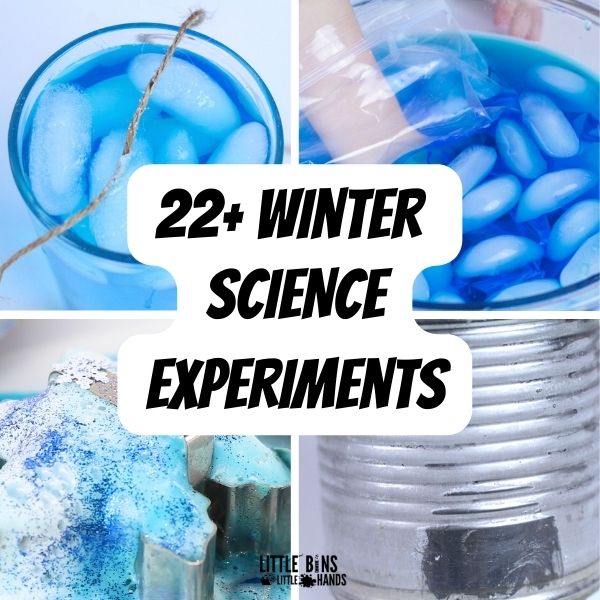
Exciting December 2026 Science Experiments for Winter
Let’s dive into some specific, engaging experiments you can try. These are designed to be simple, using household items, and highly educational. Remember, safety first, and always supervise children during experiments.
Experiment 1: Instant Ice Wonders
This experiment always amazes! It demonstrates supercooling, a phenomenon where water stays liquid below its freezing point. The trick is to have very still, purified water.
What You’ll Need:
- Bottled purified water (at least two unopened bottles)
- Freezer
- A bowl of ice with a few ice cubes
Steps:
- Place the unopened water bottles in the freezer for about 2.5 to 3 hours. The exact time depends on your freezer’s temperature. You want the water to be very cold but not frozen.
- Carefully remove one bottle without shaking it.
- Place an ice cube in a bowl. Slowly pour the supercooled water onto the ice cube.
- Watch as the water instantly crystallizes, forming a tower of ice!
What You Learn: This is a fantastic demonstration of supercooling and rapid crystallization. It shows how a slight disturbance can trigger a phase change. It’s a true physics phenomenon in action.
Experiment 2: Colorful Density Tower
Explore liquid density with a visually stunning tower of colors. This experiment is a beautiful way to understand that different liquids have different weights for the same volume.
What You’ll Need:
- Tall, clear glass or jar
- Honey
- Corn syrup (dyed with food coloring if desired)
- Dish soap
- Water (dyed with food coloring)
- Vegetable oil
- Rubbing alcohol (dyed with food coloring)
- Small objects (grape, cherry tomato, plastic bead, paper clip)
Steps:
- Carefully pour the liquids into the glass in this order: honey, corn syrup, dish soap, water, vegetable oil, rubbing alcohol. Pour slowly down the side of the glass to prevent mixing.
- Observe the distinct layers forming.
- Gently drop different small objects into the tower and see where they settle.
What You Learn: Each liquid settles into a specific layer based on its density. Denser liquids sink, while less dense liquids float. The objects settle at the level of liquids with similar density, illustrating buoyancy principles.
Experiment 3: Frosty Crystal Ornaments
Grow beautiful borax crystals overnight to create sparkling ornaments. This DIY science project is a classic and highly rewarding.
What You’ll Need:
- Borax laundry booster
- Boiling water
- Pencils or craft sticks
- String
- Pipe cleaners (bent into shapes like stars or snowflakes)
- Wide-mouthed jar or container
Steps:
- Tie one end of a string to a pipe cleaner shape and the other end to a pencil. The pencil will rest across the top of the jar, suspending the pipe cleaner. Ensure the pipe cleaner doesn’t touch the bottom or sides of the jar.
- In a separate bowl, stir borax into boiling water until no more dissolves (this creates a supersaturated solution). Use about 3 tablespoons of borax per cup of water.
- Carefully pour the borax solution into the jar.
- Submerge the pipe cleaner shape into the solution, ensuring it’s fully covered.
- Leave the jar undisturbed overnight (6-12 hours).
- In the morning, carefully remove your crystal ornament and let it dry.
What You Learn: As the water cools, it can no longer hold all the dissolved borax. The excess borax precipitates out of the solution and attaches to the pipe cleaner, forming beautiful crystals. This teaches about solubility, saturation, and crystal growth.
Experiment 4: Blubber Glove Insulation Test
Experience how insulation protects against cold, just like blubber protects marine animals. This is a very tangible insulation experiment.
What You’ll Need:
- A large bowl of ice water
- Shortening or lard (vegetable shortening works well)
- Two plastic Ziploc bags (gallon size)
- A stopwatch or timer
Steps:
- Turn one Ziploc bag inside out and place it inside the other bag.
- Fill the space between the two bags with shortening, spreading it evenly. This creates your “blubber glove.”
- Place one hand (without the blubber glove) into the ice water and note how long you can comfortably keep it there.
- Now, put your other hand into the blubber glove, then place that hand into the ice water.
- Compare how long you can keep your hand in the ice water with and without the blubber glove.
What You Learn: The layer of shortening traps heat, acting as an insulator and protecting your hand from the cold. This experiment vividly demonstrates the concept of thermal insulation and how it helps organisms survive in frigid environments.
Planning Your Winter Science Adventures
To make your December 2026 science experiments successful, a little planning goes a long way. Consider the age group, available materials, and the time you have.
Tips for Successful Experimentation
- Gather Materials in Advance: Check your pantry and local stores for all necessary items. Many easy science experiments use common household supplies.
- Read Instructions Thoroughly: Understand each step before you begin.
- Prepare Your Workspace: Lay down newspaper or a plastic tablecloth to protect surfaces from spills.
- Encourage Observation: Ask open-ended questions like “What do you notice?” or “Why do you think that happened?”
- Document Findings: Encourage older children to write down their hypotheses, observations, and conclusions. Younger children can draw pictures.
- Keep it Fun: The goal is to spark curiosity, not to stress over perfect results.
Ensuring a Safe Learning Environment
Safety is paramount, especially when working with children. Always supervise closely. For younger children, pre-measure ingredients where appropriate. Discuss potential hazards, such as hot water or sharp objects, before starting.

Here’s a quick safety checklist:
- Use safety goggles when appropriate (e.g., with borax or other chemicals, even mild ones).
- Handle hot water with extreme care. Adult supervision is crucial.
- Never taste or ingest experiment materials unless explicitly stated as food-safe.
- Clean up spills immediately to prevent slips or contamination.
- Dispose of materials properly according to local guidelines.
Tailoring Experiments for Different Age Groups
Science is for everyone, regardless of age! Adapting these winter science activities ensures maximum engagement and learning for different developmental stages.
Preschool and Early Elementary (Ages 3-7)
Focus on sensory exploration and simple observation. Keep instructions brief and hands-on. The Blubber Glove and Colorful Density Tower are great for this age group, emphasizing visual appeal and tactile experiences. Use larger, non-choking hazard objects for the density tower. The goal is exposure and wonder.
Elementary and Middle School (Ages 8-12)
Introduce more complex concepts and encourage prediction and analysis. The Instant Ice and Crystal Ornaments experiments are perfect, allowing them to follow multi-step instructions and record observations. Introduce scientific vocabulary like “supercooling” or “supersaturated solution.” Encourage them to hypothesize outcomes.
Teenagers and Beyond (Ages 13+)
Challenge them with extensions, modifications, and deeper research. For instance, they could experiment with different types of salt for crystal growth, or vary the temperature for the Instant Ice experiment to find optimal conditions. Discuss the real-world applications of these principles in engineering, meteorology, or chemistry. Encourage independent research and problem-solving.
Integrating Technology and Nature in Winter Science
While hands-on experiments are key, modern tools and outdoor exploration can enhance the learning experience. Combining these elements provides a holistic approach to STEM education.

Using Digital Tools for Enhanced Learning
There are many apps and websites that can complement your experiments. For instance, time-lapse photography apps can capture the slow growth of crystals, offering a new perspective. Educational videos can provide background information or explain complex theories in an engaging way. Digital thermometers can be used for more precise temperature measurements in experiments involving freezing and melting points, enhancing data collection and analysis.
Embracing Outdoor Winter Observations
Don’t forget the ultimate winter laboratory: the outdoors! Bundle up and go on a “winter science walk.” Observe how snow forms on branches, the patterns of ice on puddles, or how animals adapt to the cold. Take magnifying glasses to examine snowflakes up close. Collect samples of snow and ice to bring indoors for melting experiments. This connects your indoor learning directly to the natural world, reinforcing ecological awareness.
The Broader Impact of Early Science Engagement
Engaging children in science from an early age does more than just teach them facts. It cultivates a mindset of inquiry, resilience, and problem-solving. These are skills that transcend scientific disciplines and are valuable in all aspects of life.
Fostering Curiosity and Lifelong Learning
When children discover the answers to their own questions through experimentation, it builds confidence and a desire to learn more. It teaches them that it’s okay not to know everything, but it’s important to ask questions and seek answers. This approach to learning can ignite a lifelong passion for science and discovery.
Developing Essential 21st-Century Skills
Beyond scientific knowledge, these activities hone critical 21st-century skills. They involve communication (explaining observations), collaboration (working on projects together), creativity (designing solutions), and critical thinking (analyzing results). These are the skills that empower future innovators and problem-solvers.
Experiment Showcase: At-a-Glance Guide
Here’s a summary table to help you quickly choose your next winter science activity:
| Experiment Name | Core Concept | Typical Age Group | Complexity | Key Materials | Estimated Time |
|---|---|---|---|---|---|
| Instant Ice Wonders | Supercooling, Phase Change | 8+ (with supervision) | Medium | Purified water, Freezer, Ice cubes | 3 hours prep, 5 min demo |
| Colorful Density Tower | Density, Buoyancy | All ages (with help) | Easy | Various liquids, Clear jar | 20-30 minutes |
| Frosty Crystal Ornaments | Crystallization, Solubility | 6+ (with supervision) | Medium | Borax, Boiling water, Pipe cleaners | 30 min prep, 6-12 hours wait |
| Blubber Glove Insulation | Thermal Insulation | 4+ (with supervision) | Easy | Shortening, Ice water, Ziploc bags | 15-20 minutes |
| DIY Snow Volcano | Chemical Reaction, Acid-Base | 5+ (with supervision) | Easy | Baking soda, Vinegar, Snow | 10-15 minutes |
Final Thoughts on Winter Science Exploration
As we wrap up our scientific journey through winter, remember that the most valuable part of these experiments is the shared experience. The laughter, the “aha!” moments, and the simple joy of discovery are what truly matter. December 2026 offers a unique window to explore the science that shapes our coldest season, turning chilly days into opportunities for bright minds to shine.
Whether you’re creating shimmering crystals, observing the incredible properties of ice, or building a multi-layered density tower, these educational activities will undoubtedly spark a lifelong love for learning. So, gather your materials, embrace your inner scientist, and make this winter a season of extraordinary scientific exploration and family fun. The wonders of winter are waiting for you to uncover them!
Frequently Asked Questions
What are the best types of science experiments for winter?
Winter science experiments often leverage the cold temperatures and seasonal phenomena, focusing on concepts like states of matter (ice, freezing, melting), density, thermal insulation, and crystallization. Experiments involving ice, snow, growing crystals, or understanding how things stay warm are particularly engaging and relevant.
Are winter science experiments suitable for all ages?
Absolutely! Many winter science experiments can be adapted for various age groups. Younger children can focus on sensory experiences and basic observation, while older children and teenagers can delve deeper into the scientific principles, hypotheses, and detailed data collection, making them suitable for everyone from preschoolers to high schoolers.
What common household items can I use for winter science projects?
You’ll be surprised how many experiments can be done with everyday items! Common materials include water, salt, food coloring, ice cubes, clear jars or glasses, vegetable oil, dish soap, borax, pipe cleaners, string, baking soda, vinegar, and various insulating materials like fabric scraps or paper. This makes **winter science activities** both accessible and affordable.
How can I ensure safety during science experiments with children?
Safety is crucial. Always supervise children closely, especially when using hot water or small objects. Ensure proper ventilation if using any strong-smelling substances. Teach children not to taste experiment materials unless they are explicitly food-safe. Always clean up spills promptly and properly dispose of materials after the activity to maintain a safe learning environment.