As we turn the calendar page to a new year, the cosmos continues its grand dance, offering us celestial spectacles and fascinating close encounters. January 2026 promises to be a particularly intriguing month for space enthusiasts and scientists alike, with several January 2026 asteroid flybys gracing our cosmic neighborhood. These close approaches offer invaluable opportunities for research and skywatching.
For centuries, humanity has gazed at the stars, wondering about the mysteries held within our vast universe. Today, thanks to incredible advancements in astronomy and space technology, we can track these cosmic visitors with remarkable precision. This article will delve into what these upcoming events mean for us, how scientists monitor them, and what you might be able to observe from your own backyard.
Understanding Asteroid Flybys: Our Cosmic Neighbors
An asteroid flyby occurs when a celestial body, like an asteroid, passes relatively close to Earth. While the term ‘close’ is relative in astronomical terms, these events are crucial for understanding the dynamics of our solar system. Most asteroids pose no threat, simply continuing their predictable orbits.
These flybys allow astronomers to study asteroids in greater detail than ever before. It’s a chance to gather data on their size, composition, and trajectory. Each close approach helps refine our models of orbital mechanics and enhances our planetary defense strategies.
What Exactly is an Asteroid?
Asteroids are rocky, airless remnants left over from the early formation of our solar system. They vary greatly in size, from small pebbles to objects hundreds of kilometers across. The vast majority reside in the main asteroid belt between Mars and Jupiter.
However, some asteroids have orbits that bring them closer to Earth. These are known as Near-Earth Objects (NEOs). When these NEOs make a close pass to our planet, we call it an asteroid flyby.
Why We Track These Celestial Travelers
Monitoring asteroids is far more than just a scientific curiosity; it’s a critical aspect of modern astronomy and planetary safety. The reasons are multifaceted, ranging from protecting our planet to unlocking secrets about the solar system’s origins.
Planetary Defense: Safeguarding Our World
One of the primary reasons for tracking asteroids is planetary defense. While large, catastrophic impacts are extremely rare, understanding the trajectories of potentially hazardous asteroids is vital. Organizations like NASA’s Planetary Defense Coordination Office (PDCO) and the European Space Agency (ESA) diligently watch the skies.
They use powerful telescopes and radar systems to detect, track, and characterize NEOs. This early warning system allows scientists to assess any potential impact probability. The goal is to identify any asteroid that might pose a risk to Earth decades or even centuries in advance, allowing for potential mitigation strategies.
Scientific Value: Unlocking Solar System Secrets
Asteroids are essentially time capsules from the early solar system. They contain pristine material that hasn’t changed significantly since their formation. Studying their composition can reveal clues about the conditions and building blocks that led to the creation of planets.
Close flybys provide unique opportunities for scientists to gather more data on these objects. They can use spectroscopy to determine an asteroid’s mineralogy or radar imaging to map its shape and surface features. This data is invaluable for understanding planetary formation and evolution.
The January 2026 Asteroid Flybys: What to Expect
January 2026 is poised to be an active month for asteroid observations. While specific names and exact distances are always subject to refinement as objects are continually tracked, the general trend indicates several notable close approaches. This provides an excellent opportunity for both professional and amateur astronomers.

Key Close Approaches and Their Significance
Scientists will be closely monitoring any objects classified as Potentially Hazardous Asteroids (PHAs), though the vast majority of close flybys are entirely benign. The focus will be on objects that pass within a few lunar distances (LD) of Earth, providing the best chances for detailed study.
Each flyby, regardless of an asteroid’s size or distance, contributes to our growing database of NEOs. This data helps us predict future trajectories with even greater accuracy. The January 2026 asteroid flybys are no exception, adding valuable data points to our understanding of the asteroid population.
Expected Distances and Sizes
Asteroids vary dramatically in size, from a few meters to many kilometers across. Even small objects can provide significant scientific insight during a close approach. Their distances are typically measured in lunar distances (LD), where one LD is the average distance between Earth and the Moon (approximately 384,400 kilometers).
For instance, an asteroid passing at 10 LD is still nearly 4 million kilometers away – a safe distance indeed. Here’s a hypothetical look at some of the types of objects and their characteristics that might be observed during the month:
| Asteroid Designation | Estimated Diameter (m) | Closest Approach Date (UTC) | Minimum Earth Distance (LD) | Discovery Date | Observation Potential |
|---|---|---|---|---|---|
| 2026 QA1 | 50-110 | Jan 03, 2026 | 7.5 | 2024 Sep 12 | Moderate |
| 2026 QB2 | 15-30 | Jan 10, 2026 | 2.1 | 2025 Apr 05 | Low (small) |
| 2026 QC3 | 200-450 | Jan 18, 2026 | 12.3 | 2023 Dec 01 | High |
| 2026 QD4 | 8-18 | Jan 25, 2026 | 0.8 | 2025 Oct 20 | Very High (very close, but small) |
| 2026 QE5 | 70-150 | Jan 29, 2026 | 9.0 | 2024 Nov 15 | Moderate |
(Note: The data in this table is hypothetical and for illustrative purposes only, as specific, confirmed data for January 2026 is still evolving and would be published closer to the dates by official channels.)
How We Track These Cosmic Visitors
The ability to predict and track asteroid flybys is a testament to incredible scientific and technological ingenuity. It involves a global network of telescopes, advanced computational models, and dedicated teams of astronomers.
Observatory Networks and Survey Telescopes
The first step in tracking NEOs is discovery. This is often done by survey telescopes that scan large swaths of the sky night after night. Projects like Pan-STARRS in Hawaii and the ATLAS system are examples of these dedicated asteroid hunters.
Once an object is spotted, its position is measured over several nights. This initial data allows astronomers to calculate a preliminary orbit. If the object appears to be a NEO, it’s flagged for further, more precise follow-up observations.
Advanced Technologies: Radar and Follow-Up
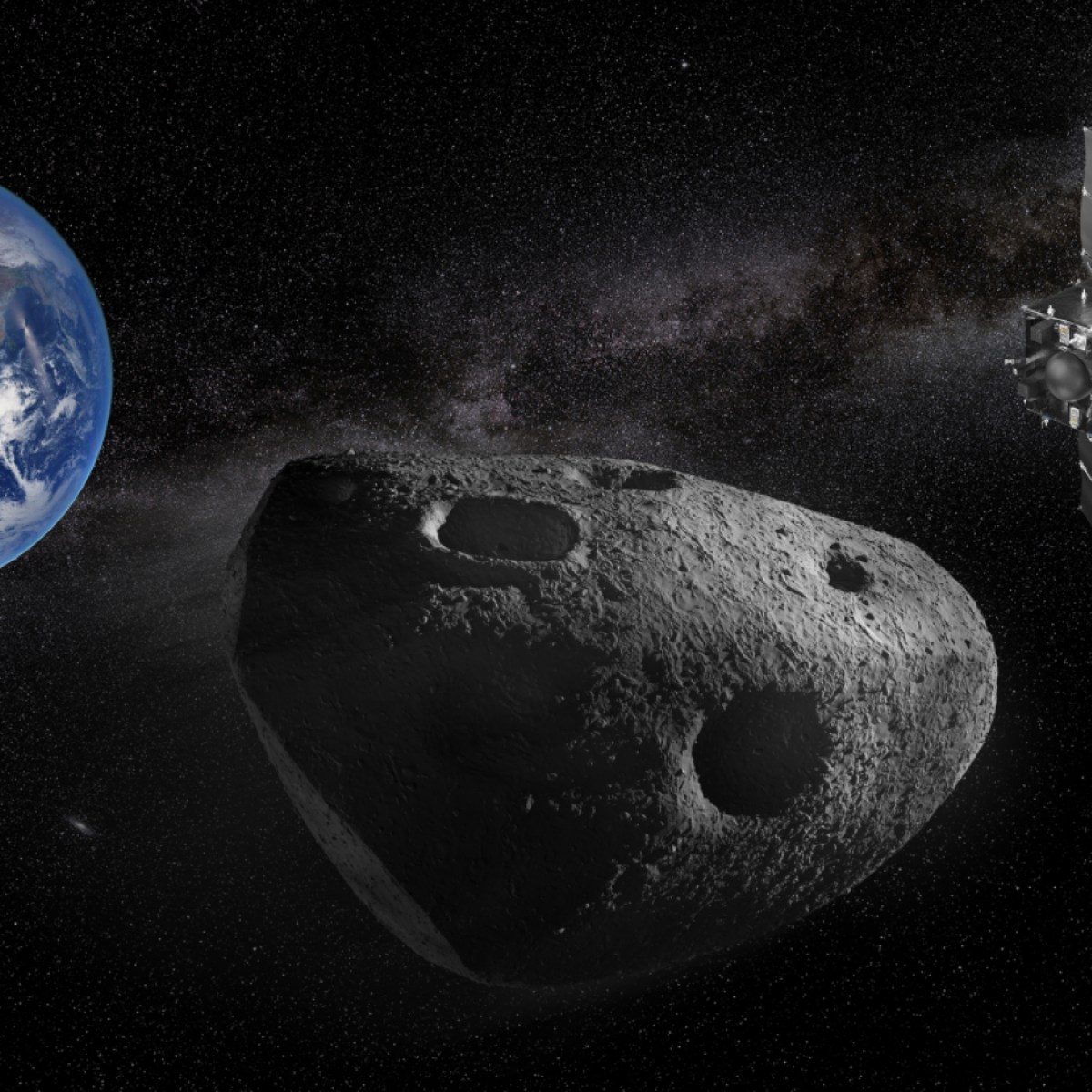
For asteroids that make particularly close approaches, powerful radar telescopes, such as Arecibo (before its collapse) and Goldstone, can be used. These radars bounce signals off the asteroid, providing incredibly detailed information about its size, shape, rotation, and exact trajectory.
This radar observation significantly improves the precision of orbital calculations. It helps narrow down uncertainties, ensuring scientists can confidently predict whether an asteroid poses any threat and when its closest approach will occur.
The Role of Space Agencies and International Collaboration
Tracking asteroids is a global effort. Space agencies like NASA and ESA collaborate with observatories and universities worldwide. The Minor Planet Center (MPC), funded by NASA, is the official body responsible for collecting and disseminating observational data for minor planets and comets.
This international collaboration ensures comprehensive sky coverage and rapid sharing of critical information. It’s a prime example of how scientific cooperation benefits all of humanity, protecting our shared home.
Amateur Astronomy and Skywatching: Your Role in the Cosmos
While professional observatories lead the charge, amateur astronomers also play a crucial role in NEO discovery and follow-up. Many significant astronomical discoveries have been made by dedicated individuals with their backyard telescopes. The January 2026 asteroid flybys could offer some accessible viewing opportunities.
Tips for Observing Asteroids
Observing asteroids usually requires a bit of planning and patience. Unlike planets, they often appear as faint, star-like points of light that move slowly against the background stars. To spot them:
- Know the Coordinates: Use official data from sources like the Minor Planet Center or NASA/JPL to get precise celestial coordinates and ephemerides (predicted positions).
- Use a Star Chart: Plot the asteroid’s path on a star chart to identify its expected movement over time.
- Dark Skies: Light pollution can make faint objects difficult to see. Seek out a dark sky location away from city lights.
- Patience is Key: You won’t see an asteroid zipping across the sky. Instead, you’ll notice its subtle movement relative to background stars over minutes or hours. Sketching the star field and noting the asteroid’s position at intervals can confirm movement.
Equipment Needed for Asteroid Viewing
For brighter asteroids, binoculars can suffice, especially for confirming movement. However, a good telescope will significantly enhance your chances of success. Here’s what might be helpful:
- Telescope: A reflector or refractor with an aperture of 6 inches (150mm) or larger will provide good light-gathering capability.
- Go-To Mount: A computerized mount that can automatically point to celestial objects is incredibly helpful for finding faint asteroids.
- Eyepieces: Low-power, wide-field eyepieces are good for initially locating the target. Higher-power eyepieces can be used for more detailed viewing once located.
- Astronomy Apps/Software: Many apps can provide real-time asteroid positions and star charts, making it easier to plan your observation session.
Are We Safe? Assessing the Risk from Asteroids
It’s natural to feel a sense of unease when hearing about asteroid close approaches. However, it’s important to understand the scientific reality behind these events. The answer to ‘Are we safe?’ is a resounding yes, primarily due to the diligent work of scientists and the vastness of space.
Understanding Impact Probability
The vast majority of asteroids are on stable orbits that pose no threat to Earth. For any object with even a tiny chance of impact, scientists calculate its impact probability. These probabilities are often infinitesimally small, indicating that a direct collision is exceptionally unlikely.
The monitoring systems are so precise that even minor gravitational nudges from planets are factored into calculations. This allows for highly accurate long-term predictions, giving us plenty of notice if a genuine threat were ever to emerge.
Mitigation Strategies: Preparing for the Unlikely
Even though the risk is extremely low, scientists are actively researching and developing mitigation strategies in case an asteroid were ever found to be on a collision course with Earth. These strategies generally fall into two categories:
- Kinetic Impactor: Sending a spacecraft to directly collide with the asteroid, slightly altering its velocity and thus its orbit, diverting it from Earth.
- Gravity Tractor: Using the gravitational pull of a nearby spacecraft to subtly tug the asteroid off course over time.
These concepts are not science fiction; they are areas of active research and development, showcasing our proactive approach to planetary defense. Missions like NASA’s DART (Double Asteroid Redirection Test) successfully demonstrated the kinetic impactor technique.
The Future of Asteroid Exploration
Our fascination with asteroids extends beyond just tracking their paths. These ancient space rocks hold keys to understanding not only our past but also our future in space. The January 2026 asteroid flybys are just another stepping stone in this ongoing journey of discovery.
Upcoming Missions and Deep Space Exploration
Several missions are planned or underway to study asteroids up close. Missions like OSIRIS-REx and Hayabusa2 have already returned samples from asteroids, providing invaluable insights into their composition.
Future missions may involve asteroid mining, where valuable resources could be extracted for space construction or even fuel. These ambitious projects highlight the long-term potential of asteroid research for space exploration and resource utilization.

Benefits of Asteroid Research for Humanity
Beyond planetary defense and scientific discovery, asteroid research contributes to a broader understanding of our place in the universe. It fosters technological innovation, inspires new generations of scientists, and reminds us of the dynamic nature of our solar system.
Every flyby, every new discovery, deepens our appreciation for the cosmos. It reinforces the fact that we are part of an incredibly intricate and ever-changing universe, with endless wonders yet to uncover.
As we navigate through the opening days of the new year, the January 2026 asteroid flybys serve as a wonderful reminder of the constant cosmic ballet playing out above us. They are a testament to our ongoing quest for knowledge and our unwavering commitment to protecting our home planet. Keep looking up!

Frequently Asked Questions
Are the January 2026 asteroid flybys dangerous for Earth?
No, the asteroid flybys scheduled for January 2026 are not considered dangerous. Space agencies like NASA and ESA continuously monitor these objects, and any predicted close approaches are at very safe distances, posing no risk of impact.
What is a Near-Earth Object (NEO) and why are they tracked?
A Near-Earth Object (NEO) is an asteroid or comet whose orbit brings it within approximately 50 million kilometers (30 million miles) of Earth’s orbit. They are tracked for planetary defense to identify any potential impact risks, and for scientific research to understand the early solar system’s composition.
Can amateur astronomers observe these asteroid flybys?
Potentially, yes. Some asteroids, especially larger ones or those making closer passes, might be visible with amateur telescopes or even powerful binoculars from dark-sky locations. It requires precise celestial coordinates and careful observation to spot their slow movement against background stars.
How do scientists track asteroids and predict their paths?
Scientists use a global network of survey telescopes to discover asteroids and then follow-up with more powerful ground-based and space-based observatories. They use advanced computational models and radar observations to calculate precise orbits and predict future trajectories, often many years in advance.