As we step into a new year, the cosmic canvas above us prepares to put on a spectacular show. For anyone with a curious eye, the January 2026 Planet Visibility Guide offers a unique opportunity to connect with our solar system neighbors. There’s a special magic in spotting a distant world with your own eyes, a feeling of wonder that transcends the everyday. Whether you’re a seasoned amateur astronomer or just beginning your skywatching journey, January 2026 promises some truly memorable celestial moments.
I’ve personally spent countless nights under the stars, from city parks to remote dark-sky preserves. Each time, the sheer scale of the cosmos fills me with awe. This guide is crafted to share that excitement and help you easily navigate the night sky, revealing where and when to find the planets.
Understanding the Dance of the Planets
Before diving into specific timings, it’s helpful to grasp a few fundamental concepts. Planet visibility isn’t static; it changes daily due to Earth’s and other planets’ orbits. Factors like apparent magnitude, position relative to the Sun, and local conditions play crucial roles.
What is Apparent Magnitude?
Apparent magnitude describes how bright a celestial object appears from Earth. Lower numbers indicate brighter objects. For example, Venus often shines with a magnitude around -4, making it incredibly brilliant. Fainter objects like Uranus and Neptune might hover around magnitudes +5 to +8, requiring optical aid.
The Sun’s Influence on Visibility
Our star is the ultimate light source, making daylight observations impossible for most planets. Planets are best seen when they are far from the Sun in our sky, typically at dawn or dusk, or throughout the night. Their position relative to sunrise and sunset dictates if they are a ‘morning star’ or an ‘evening star’.
Orbital Mechanics and Planetary Positions
Each planet follows its own elliptical path around the Sun. These orbital differences lead to varying distances from Earth, affecting their apparent size and brightness. Sometimes, planets align in fascinating conjunctions, creating beautiful sky views. Understanding these movements is key to successful skywatching.
The January 2026 Planet Visibility Lineup
Let’s embark on a journey through the solar system, focusing on what you can expect to see in January 2026. This month offers a diverse range of viewing experiences, from brilliant naked-eye targets to challenging telescopic observations. Prepare your binoculars and telescopes for some stunning sights.
Mercury: The Elusive Inner Planet
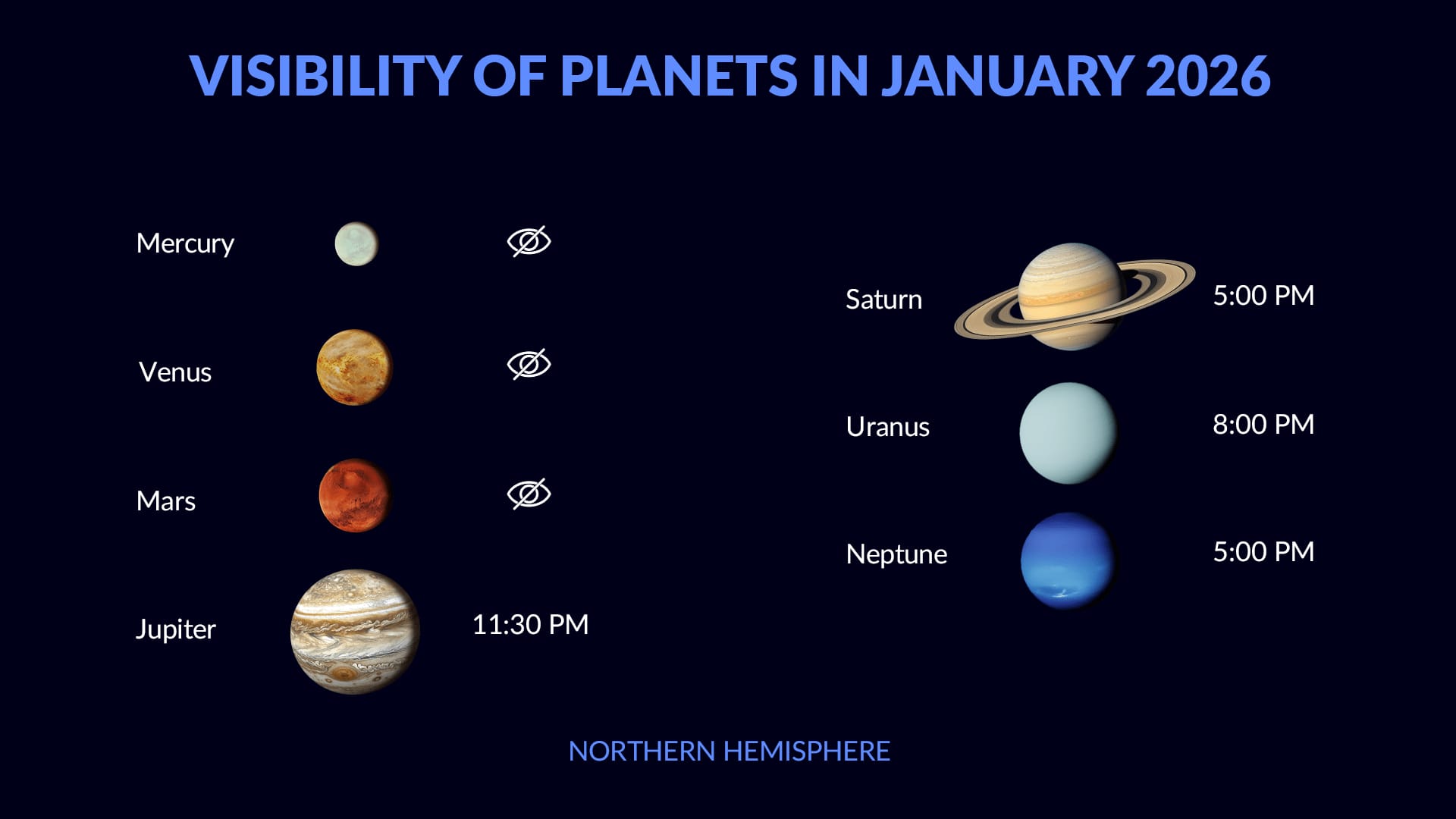
Mercury, being closest to the Sun, is notoriously difficult to spot. It only appears low on the horizon during twilight hours. For January 2026, keen observers in the Northern Hemisphere will have their best chance to spot Mercury shortly after sunset during the first two weeks of the month. Look towards the southwestern horizon. It will gradually become visible as an evening star, reaching its greatest elongation around January 15th, making it easier to catch. Magnitude will range from about -0.5 to +1.0 during its peak visibility.
Venus: The Dazzling Evening Star
Venus will continue its reign as the brilliant evening star throughout January 2026. It will dominate the western sky after sunset, shining with an unmistakable glow. Its incredible brightness, often around magnitude -4.0, makes it impossible to miss. Even city lights won’t diminish its splendor. Binoculars might reveal its crescent phase as it progresses towards inferior conjunction later in the year.
Mars: The Red Planet’s Journey
Mars will be present in the morning sky for January 2026. It will be gradually brightening but still relatively modest in magnitude, perhaps around +1.0 to +1.2. Look for it in the southeastern sky before dawn. While not at its brightest, it will still offer a distinct reddish hue. Telescopic views will show a small disk, perfect for tracking its orbital path.
Jupiter: The Gas Giant’s Grand Presence
Jupiter remains a consistent highlight in the night sky during January 2026. It will be an excellent target for both naked-eye and telescopic observers. Shining brightly at magnitudes typically around -2.0, Jupiter will be visible for much of the night, especially in the early evening. Through a telescope, its four largest moons – Io, Europa, Ganymede, and Callisto – will be easily visible, performing their intricate dances around the giant planet. Keep an eye out for conjunctions with the Moon.
Saturn: The Ringed Jewel
Saturn, with its iconic rings, will be a stunning sight. In January 2026, it will be visible in the early morning sky. Its yellowish glow, at magnitudes around +0.7, makes it easily identifiable. While naked-eye observations show it as a bright star, even small telescopes reveal its magnificent ring system. This is always a crowd-pleaser and a personal favorite. Early morning skywatching offers serene moments to enjoy Saturn’s beauty.
Uranus and Neptune: The Distant Ice Giants
For those with a bit more patience and optical aid, Uranus and Neptune offer a rewarding challenge. Uranus, at around magnitude +5.7, can sometimes be glimpsed with the naked eye under exceptionally dark skies. However, binoculars are highly recommended to locate Uranus. Neptune, significantly fainter at magnitude +7.9, will definitely require a telescope. Both planets will be observable for much of the night in January 2026, though they will appear as small, bluish-green disks even in powerful scopes. Using a detailed star chart is essential for finding these distant worlds.
January 2026 Celestial Highlights and Conjunctions
Beyond individual planet viewing, January 2026 presents several noteworthy celestial events. These special alignments can enhance your skywatching experience. I always mark my calendar for these unique cosmic interactions.
Moon-Planet Conjunctions
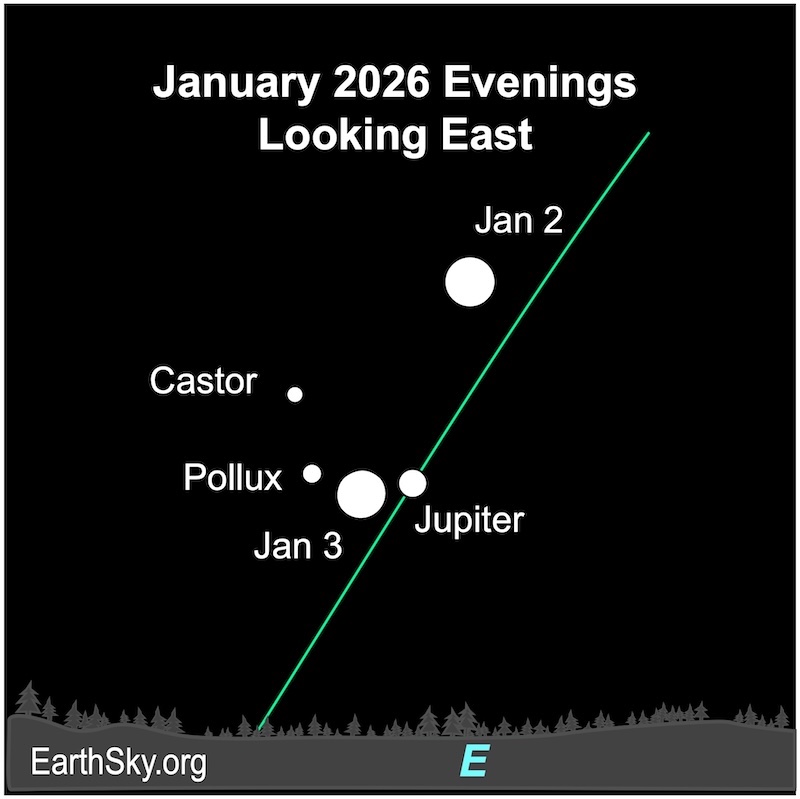
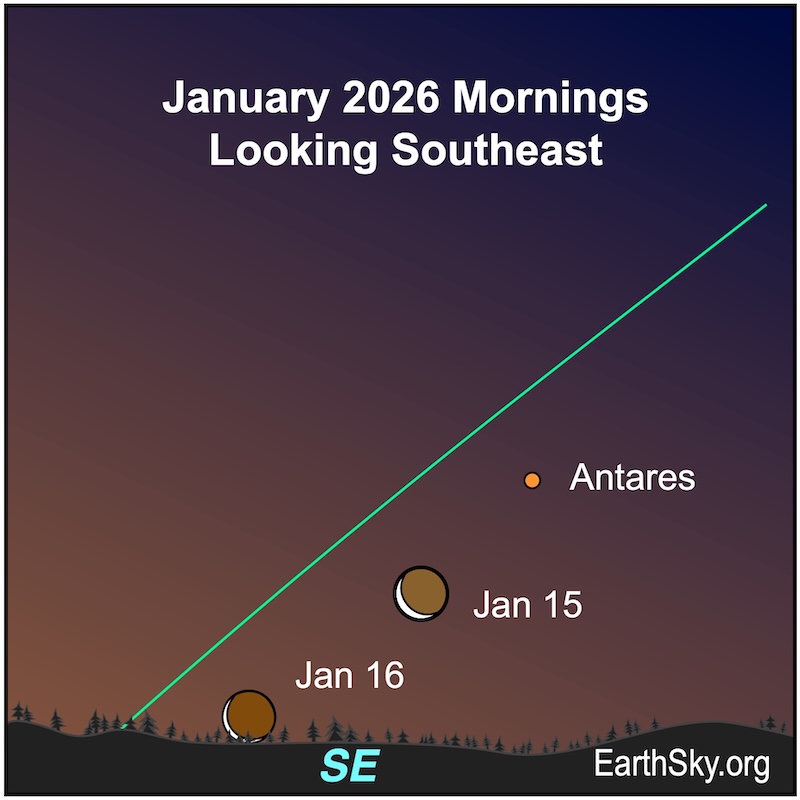
Throughout the month, the Moon will pass near various planets, creating beautiful photographic opportunities and easy navigation guides. Keep an eye out for the Moon’s close approach to Jupiter in the second week of January, forming a striking pair in the evening sky. Later in the month, a slender crescent Moon near Venus will be particularly enchanting.
Quadrantid Meteor Shower
The Quadrantid meteor shower peaks in early January. While not a planet visibility event, it’s often concurrent with early January skywatching. This can be a moderate to strong shower, though it’s relatively short-lived. Observing conditions will depend on the Moon’s phase around the peak, which is generally quite favorable in early 2026, providing a darker sky background.

Key Dates for January 2026 Planet Visibility
Planning is everything for successful skywatching. Here’s a brief overview of key dates to help you pinpoint the best times for observing our planetary neighbors. Remember, these are general guidelines; local weather and sky conditions are paramount. Always check your local sunrise/sunset times.
| Date (Approx.) | Planet | Event/Visibility | Best Time | Typical Magnitude |
|---|---|---|---|---|
| Jan 1-10 | Mercury | Evening visibility improves | Shortly after sunset | -0.5 to +0.5 |
| Jan 5 (Peak) | Quadrantids | Meteor Shower | Pre-dawn hours | Varies |
| Jan 1-31 | Venus | Brilliant Evening Star | After sunset | -4.0 |
| Jan 1-31 | Jupiter | Prominent in evening | Early evening to late night | -2.0 |
| Jan 12 | Moon-Jupiter | Close Conjunction | Evening | N/A |
| Jan 1-31 | Mars | Morning visibility | Before dawn | +1.0 to +1.2 |
| Jan 1-31 | Saturn | Morning visibility | Before dawn | +0.7 |
| Jan 1-31 | Uranus | Binocular/Telescopic | Most of the night | +5.7 |
| Jan 1-31 | Neptune | Telescopic only | Most of the night | +7.9 |
| Jan 25 | Crescent Moon | Near Venus | Shortly after sunset | N/A |
Optimizing Your Stargazing Experience
A successful night of planet watching involves more than just knowing when and where to look. Careful preparation and the right tools can significantly enhance your enjoyment. I’ve learned these tips over years of chilly nights and breathtaking discoveries.
Equipment for Planet Observation
- Naked Eye: Many planets, especially Venus, Jupiter, and Mars, are easily visible without any equipment. Enjoy the simple beauty of seeing them against the backdrop of stars.
- Binoculars: A good pair of 7×50 or 10×50 binoculars can reveal Jupiter’s Galilean moons and the phases of Venus. They are also excellent for sweeping the sky for Uranus.
- Telescopes: For detailed views of Saturn’s rings, Jupiter’s cloud bands, or to locate Neptune, a telescope is indispensable. Start with a modest refractor or Dobsonian for excellent results.
Finding a Dark Sky Location
Light pollution is the bane of stargazers. Even brilliant planets benefit from darker skies. If possible, escape city lights to a rural area or a designated dark sky park. The clarity and sheer number of stars you’ll see will be astounding.
Utilizing Star Charts and Astronomy Apps
Modern technology makes sky navigation easier than ever. Astronomy apps like SkyView Lite, Stellarium, or Star Walk 2 can show you exactly what’s above. Traditional paper star charts are also invaluable, especially for planning and learning constellations. I often use both for different aspects of my observation sessions.
Weather and Atmospheric Conditions
Clear skies are obvious, but ‘seeing’ conditions are also important. “Seeing” refers to the steadiness of the atmosphere. A turbulent atmosphere can make planets appear blurry, even through a powerful telescope. Check local weather forecasts for clear nights and stable air. High-pressure systems often bring better seeing.
Tips for Different Hemispheres
While this guide offers general visibility, slight variations occur between the Northern and Southern Hemispheres. Planets visible low in the south for Northern observers will be higher for Southern observers, and vice-versa. Always adapt the cardinal directions to your specific location for optimal viewing.
Beyond Planets: Deep-Sky Wonders
While planets are the focus, don’t forget the vast universe beyond. January nights offer stunning views of other celestial objects. With a telescope, you can explore nebulae, star clusters, and galaxies that lie far beyond our solar system. The Andromeda Galaxy (M31), for example, is a captivating target.
Taking the time to observe these wonders alongside our planetary neighbors adds depth to the skywatching experience. It reminds us of our place in the cosmic dance.
I hope this January 2026 Planet Visibility Guide inspires you to look up and discover the universe. There’s a profound satisfaction in observing these distant worlds, knowing you’re witnessing the same celestial ballet that has captivated humanity for millennia. Clear skies and happy stargazing!
Frequently Asked Questions
Which planets will be easiest to see with the naked eye in January 2026?
Venus and Jupiter will be the easiest and brightest planets to spot without any equipment in January 2026. Venus will shine brilliantly as the evening star, while Jupiter will also be very prominent throughout much of the night, especially in the early evening. Mars will be visible in the morning sky but less bright.
What equipment do I need to observe fainter planets like Uranus and Neptune?
To observe Uranus (magnitude +5.7), a good pair of binoculars (e.g., 7×50 or 10×50) under dark skies is generally sufficient, though a small telescope will provide clearer views. Neptune (magnitude +7.9) will almost certainly require a telescope to be seen as a faint, bluish disk. Using a detailed star chart or astronomy app is crucial for locating both.
Will there be any interesting celestial events besides individual planet viewing in January 2026?
Yes, January 2026 will feature several beautiful Moon-planet conjunctions, offering easy targets and great photo opportunities. Specifically, look for the Moon near Jupiter around mid-January and a slender crescent Moon near Venus later in the month. The Quadrantid meteor shower also peaks in early January, providing a chance to see shooting stars.
What’s the best time of day to look for planets in January 2026?
The best time largely depends on the specific planet. Venus will be a brilliant evening star, visible shortly after sunset. Jupiter will be visible for much of the evening. Mercury will have a narrow window just after sunset in the first half of the month. Mars and Saturn will be best seen in the pre-dawn morning sky. Uranus and Neptune can be observed for longer periods throughout the night, given their greater distance from the Sun’s glare.