There’s something truly magical about the full moon gracing our night sky. It’s a celestial spectacle that has captivated humanity for millennia, inspiring poets, scientists, and dreamers alike. As an avid skywatcher, I always look forward to these luminous events, and the July 2026 Full Moon Schedule is already on my calendar. This particular full moon promises to be a stunning display, and preparing for it ensures you won’t miss a moment of its grandeur. Whether you’re a seasoned astronomer or just someone who appreciates the beauty of the cosmos, understanding when and how to observe this event is key.
Unveiling the Lunar Dance: Understanding Full Moons
Before we dive into the specifics of July 2026, let’s briefly touch upon what makes a full moon so special. A full moon occurs when the Moon is exactly opposite the Sun in its orbit around Earth. This alignment means the entire face of the Moon, as seen from Earth, is illuminated by the Sun’s rays. It’s a spectacular phase of the lunar cycle, offering the brightest and most prominent view of our natural satellite.

The moon’s journey around Earth takes roughly 29.5 days to complete one full cycle of phases, from new moon to new moon. This is known as a synodic month. Each month brings a new full moon, often given unique names by various cultures based on seasonal changes or natural occurrences. These traditional names add a rich layer of cultural context to our skywatching experiences.
The July Full Moon: The Story of the Buck Moon
The full moon in July carries a beautiful traditional name: the Buck Moon. This name originated from Native American traditions, specifically referring to the time of year when male deer, or bucks, begin to grow new antlers. These antlers, which are shed and regrown annually, are a symbol of nature’s continuous regeneration.
Beyond the Buck Moon, other cultures have their own evocative names for the July full moon. You might hear it called the Thunder Moon, reflecting the frequent thunderstorms of summer in the Northern Hemisphere. It’s also known as the Hay Moon, acknowledging the season for harvesting hay. These names connect us to agricultural rhythms and the deep history of human observation of the sky.
Mark Your Calendars: The Precise July 2026 Full Moon Schedule
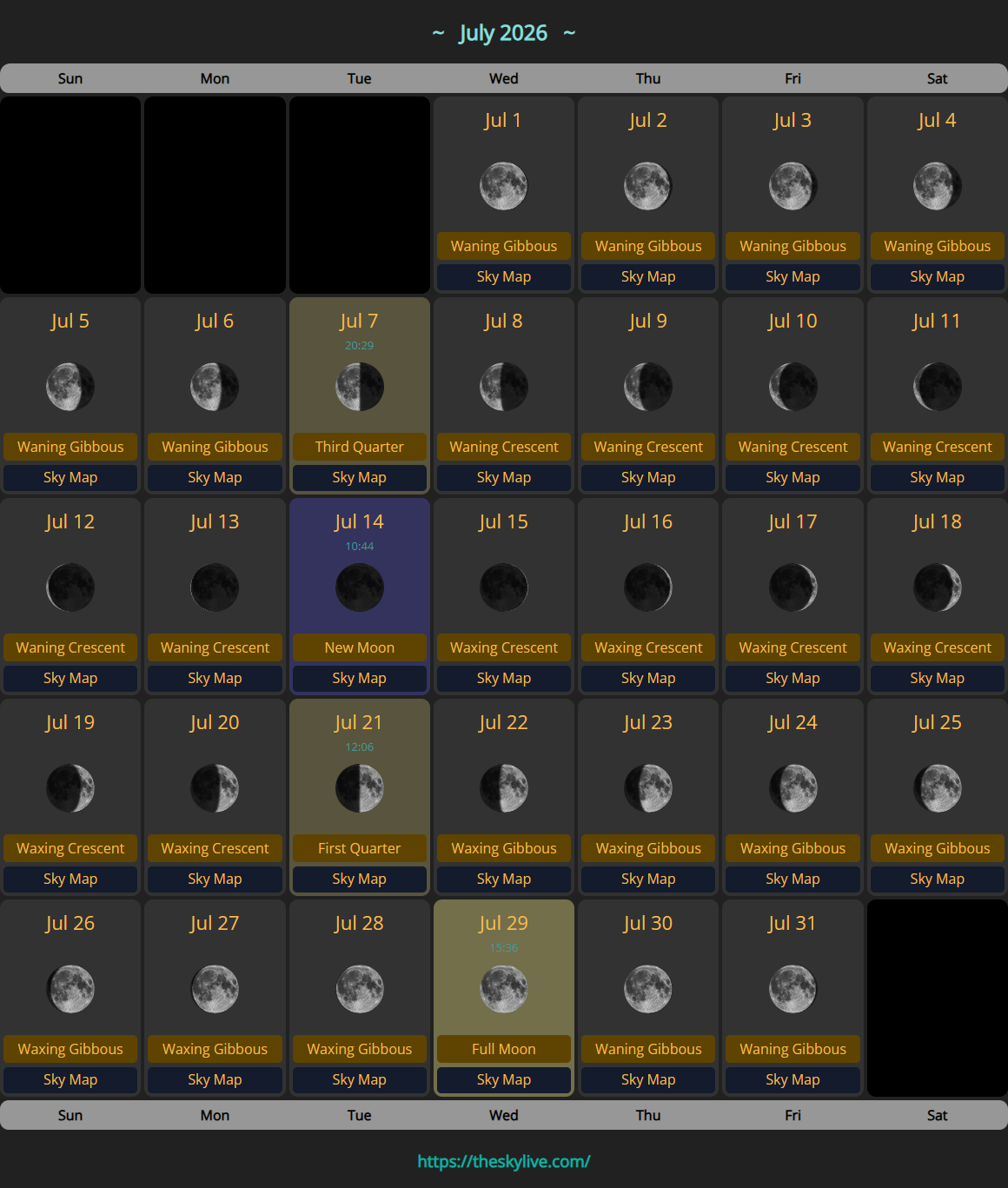
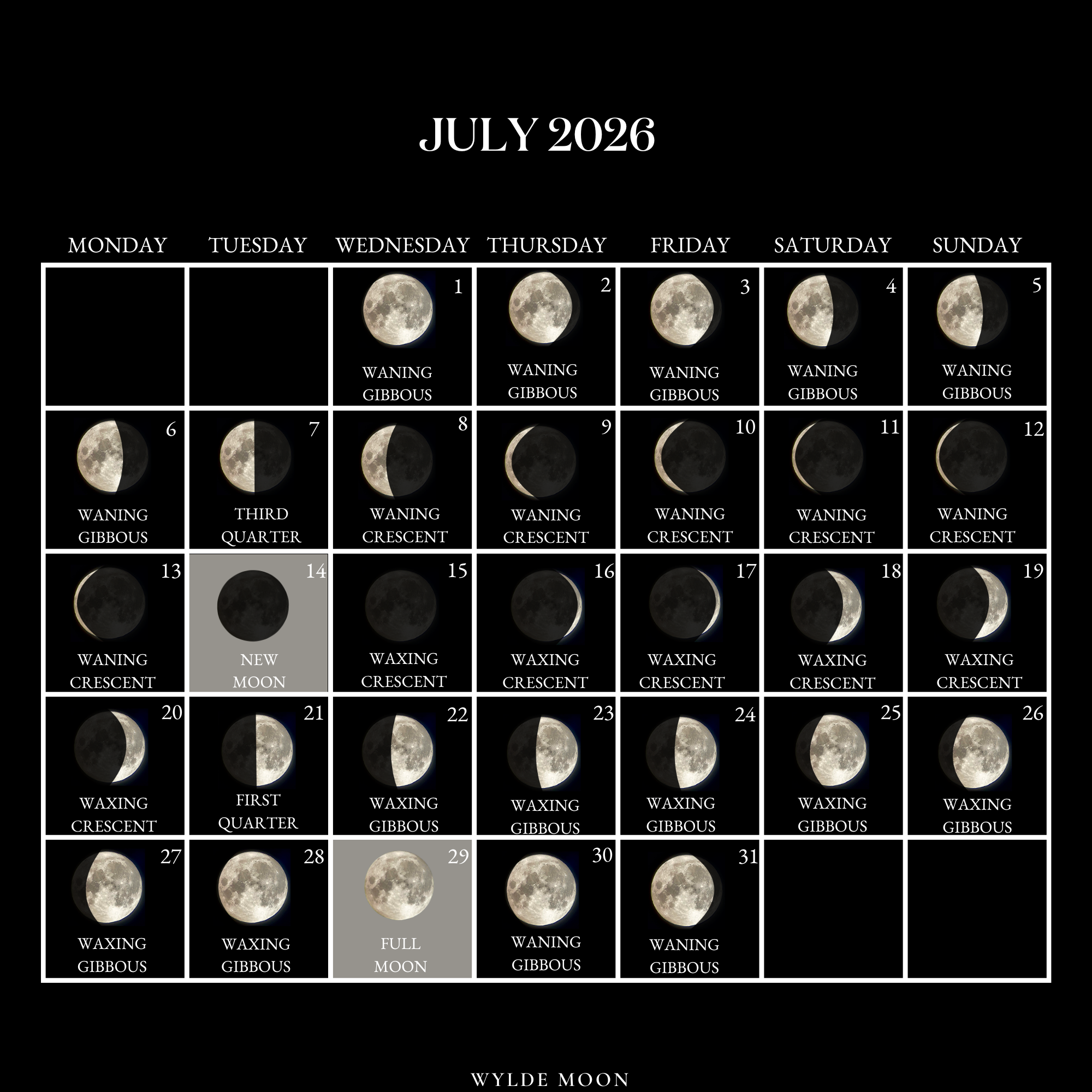
Now for the main event! Knowing the exact date and time is crucial for optimal viewing. The July 2026 Full Moon Schedule highlights the moment of peak illumination. For those eager to witness this celestial phenomenon, clarity on these details is paramount.
The full moon in July 2026 will reach its maximum illumination on Thursday, July 9, 2026. The precise moment of fullness will vary depending on your location and time zone. Understanding Universal Coordinated Time (UTC) is helpful, as many astronomical events are cataloged using this standard. From this, you can convert to your local time.
Key Timings for the July 2026 Full Moon
Here’s a breakdown of the peak illumination time for several key time zones:
| Location / Time Zone | Date | Time of Peak Fullness |
|---|---|---|
| Universal Coordinated Time (UTC) | July 9, 2026 | 02:37 UTC |
| Eastern Time (ET) – New York, Toronto | July 8, 2026 | 10:37 PM EDT |
| Central Time (CT) – Chicago, Mexico City | July 8, 2026 | 09:37 PM CDT |
| Mountain Time (MT) – Denver, Calgary | July 8, 2026 | 08:37 PM MDT |
| Pacific Time (PT) – Los Angeles, Vancouver | July 8, 2026 | 07:37 PM PDT |
| Greenwich Mean Time (GMT) / London | July 9, 2026 | 03:37 AM BST (GMT+1) |
| Central European Time (CET) / Paris, Berlin | July 9, 2026 | 04:37 AM CEST (CET+2) |
| Australian Eastern Standard Time (AEST) / Sydney | July 9, 2026 | 12:37 PM AEST |
It’s important to remember that while the exact peak moment is fleeting, the Moon will appear full to the naked eye for approximately three days around this time. So, if you miss the precise minute, you’ll still have ample opportunity for skywatching and enjoyment.
Optimizing Your Full Moon Viewing Experience
To truly appreciate the celestial beauty of the July 2026 Full Moon, a little preparation goes a long way. As an experienced observer, I’ve found that a few simple steps can dramatically enhance the experience. It’s not just about looking up; it’s about creating the right environment.
Finding the Perfect Spot for Observation
- Seek Dark Skies: While a full moon is inherently bright, minimizing light pollution will still improve your view and the surrounding stars. Head away from city lights if possible.
- Clear Line of Sight: Ensure your viewing location has an unobstructed view of the horizon where the moon will rise and set. Tall buildings or trees can hinder your observation.
- Safety First: Choose a safe location, especially if you’re venturing out after dark. Inform someone of your plans.
Essential Skywatching Gear
You don’t need expensive equipment to enjoy the full moon, but some tools can certainly enhance the view. Even a basic pair of binoculars can reveal incredible details on the lunar surface. The craters and mare (dark plains) become much more defined.
For serious enthusiasts, a telescope will offer breathtaking close-ups. Remember to use a moon filter if observing with a telescope, as the full moon’s brightness can be intense and uncomfortable for your eyes through magnification. This filter reduces glare and improves contrast.
Weather and Planning
Always check the weather conditions for your chosen date. Clear skies are paramount for any astronomical observation. Overcast weather will completely obscure your view. Planning ahead allows for flexibility; if one night is cloudy, you might catch the moon on the night before or after its peak illumination.

Capturing the Luminescence: Full Moon Photography Tips
Many aspiring photographers are drawn to the allure of the full moon. While it presents a unique challenge, capturing its majesty is incredibly rewarding. My personal experience has taught me that patience and the right settings are key.
Basic Photography Setup
- Tripod: Absolutely essential for sharp images, especially with longer exposures or telephoto lenses.
- Telephoto Lens: To bring the moon closer and capture surface details. The longer the focal length, the better.
- Manual Settings: Forget auto mode. You’ll need full control over aperture, shutter speed, and ISO.
Recommended Camera Settings
Here are some general starting points for your camera settings. These can be adjusted based on your lens, camera, and the ambient light conditions.
- Aperture: Start around f/8 to f/11 for good depth of field and sharpness.
- Shutter Speed: The moon is bright, so a fast shutter speed is often needed. Try 1/125th to 1/250th of a second.
- ISO: Keep this as low as possible (e.g., ISO 100 or 200) to minimize noise, as the moon provides ample light.
- Manual Focus: Auto-focus can struggle in low light. Switch to manual and focus carefully on the moon’s edge.
Experimentation is vital! Take multiple shots with slightly different settings. The goal is to avoid overexposure, which can turn the moon into a blown-out white disc without any detail.
The Moon’s Influence: Tides and Beyond
Beyond its visual appeal, the full moon, like all phases of the moon, exerts a significant gravitational pull on Earth. This pull is most notably observed in the tides of our oceans. During a full moon (and new moon), the gravitational forces of the Moon and the Sun combine, leading to higher high tides and lower low tides, known as spring tides. This subtle yet powerful interaction is a constant reminder of the intricate cosmic dance.

While often discussed, the direct impact of a full moon on human behavior or sleep patterns remains a topic of scientific debate. However, the brightness of the full moon can certainly affect sleep for some individuals, particularly those sensitive to light. This reinforces the idea of the moon’s omnipresent influence on our planet and its inhabitants.
Beyond the Full Moon: July 2026’s Broader Celestial Canvas
While the July 2026 Full Moon Schedule is a highlight, the month of July often offers other fascinating astronomical events for the eager observer. It’s a great time to look for certain constellations that are prominent in the summer sky in the Northern Hemisphere, such as the Summer Triangle (Vega, Deneb, Altair).
Keep an eye out for potential meteor showers, although major ones are less common in early July. However, sporadic meteors are always a possibility on any clear night. Consulting a comprehensive astronomical calendar for July 2026 will provide details on any planetary conjunctions or other notable phenomena that might coincide with your full moon viewing.
The night sky is a dynamic canvas, and a full moon often serves as a beautiful backdrop to other wonders. Even if the full moon’s brilliance obscures fainter objects, it’s still a perfect opportunity to appreciate the vastness above.
Conclusion: Embracing the Celestial Spectacle
The July 2026 Full Moon Schedule offers a wonderful opportunity to connect with the cosmos. Whether you’re gazing up with your naked eye, through a pair of binoculars, or with a powerful telescope, the Moon’s radiant presence is always a captivating sight. From understanding its traditional names like the Buck Moon to pinpointing the precise moment of its peak illumination, preparing for this event enriches the experience immeasurably.
So, mark your calendars for Thursday, July 9, 2026, or the night before/after, depending on your time zone. Take a moment to step outside, look up, and immerse yourself in the serene glow of our celestial neighbor. It’s moments like these that remind us of the incredible beauty and wonder that exists just beyond our everyday world. Happy skywatching!
Frequently Asked Questions
When is the July 2026 Full Moon?
The July 2026 Full Moon, traditionally known as the Buck Moon, will reach its peak illumination on Thursday, July 9, 2026, at 02:37 UTC. Please convert this to your local time zone for the precise moment in your area.
What is the traditional name for the July Full Moon?
The most widely recognized traditional name for the July Full Moon is the ‘Buck Moon,’ referencing the time when male deer (bucks) begin to grow new antlers. Other names include ‘Thunder Moon’ and ‘Hay Moon.’
What are the best tips for observing the July 2026 Full Moon?
To best observe the full moon, find a location with minimal light pollution and a clear view of the horizon. Check weather forecasts for clear skies. Binoculars or a telescope can enhance the view, but the full moon is spectacular even with the naked eye. Give your eyes time to adjust to the dark.
Does the full moon affect tides?
Yes, the full moon has a significant effect on ocean tides. During a full moon, the gravitational pull of both the Moon and the Sun align and combine, resulting in stronger tidal forces. This leads to higher high tides and lower low tides, known as ‘spring tides.’